


Business Sectors
Business Sectors
Events
Contents
Conrad Shipyard ‘going and blowing’ with new construction projects
Conrad Shipyard’s backlog stretches well into 2025, with orders for tugs, towboats, ferries, barges and a series of accommodation barges for the US Navy


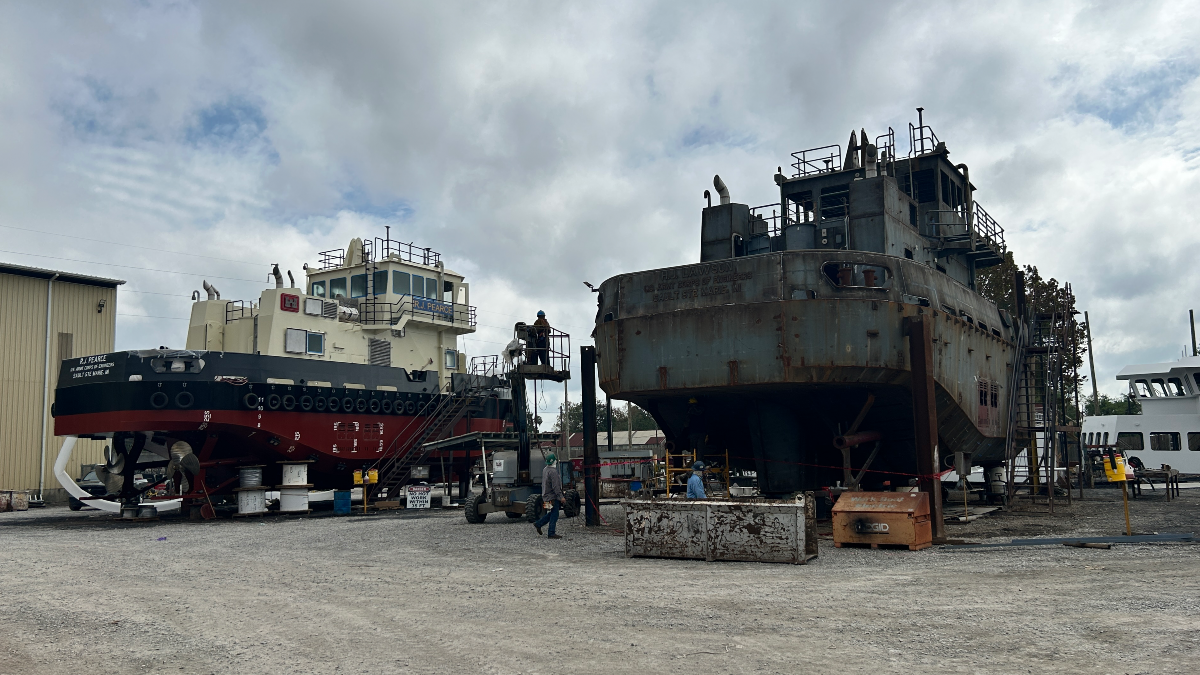
Conrad Shipyard’s new construction facilities in Louisiana are ‘going and blowing’. Panel lines hum at Conrad Deepwater South, while welders, fitters, telehandlers and crawler cranes hustle about the Amelia, Louisiana, shipyard fabricating, erecting and assembling steel modules for large commercial newbuilding projects.
Recent visits to Conrad’s Deepwater South, Deepwater Repair, Amelia and Morgan City shipyards in Louisiana showed just how busy the shipbuilder is. A series of large construction barges for an undisclosed customer were in various stages of build, modules for a tank barge were visible and a massive trailing suction hopper dredge dominated the landscape at the Conrad Deepwater South yard. At Conrad Amelia, a government contract for the US Navy’s new generation Yard, Repair, Berthing and Messing (YRBM) vessel programme is full steam ahead.
“It’s a great project for us,” Conrad Shipyard vice president of business development, Robert Sampey tells ITS. “The Navy has been very pleased with our work.” In discussing the YRBM contract, Mr Sampey describes it “as a foot in the door,” noting that experience from this contract could well lead to additional work for both the Navy and Tier 1 shipyards looking to subcontract module work.
Conrad delivered YRBM-57, the first of eight of the steel accommodation barges to the US Navy in October. Designed in house by Conrad engineers to the Navy’s specification, YRBMs serve as temporary pier side living accommodations for Navy sailors whose ships are undergoing maintenance and repair, offering comfortable sleeping quarters for up to 199 personnel, a mess area, classrooms, laundry rooms, lounges, medical offices and storerooms.
YRBM-57 will be stationed at a port in Japan, supporting naval operations in the region.
At Conrad Morgan City, a pair of icebreaking tugs for the US Army Corps of Engineers (US CoE) are well underway, a 6,000-hp towboat was taking shape, several barges were being assembled and the first of four ferries for Puerto Rico and a new hybrid-electric passenger vehicle ferry for the Trust for Governors Island in New York were in the water.
In 2023, New York City received a US$10M grant from the US Federal Transit Administration, US$7.5M of which is for installing shoreside rapid-charging infrastructure for the Governors Island hybrid-electric ferry. The ferry will operate from the Battery in lower Manhattan to Governors Island.
Designed by Seattle-based Elliott Bay Design Group, the 600-passenger, 220 ton of vehicle weight capacity ferry will incorporate Siemens Blue Drive technology, with delivery set for early 2025.
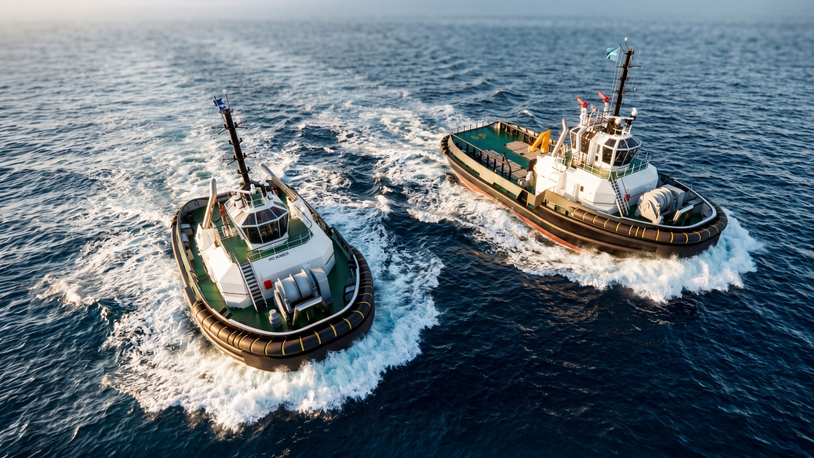
Meanwhile, the two Celre Detroit ice class tugs for the US CoE will operate on the St Mary’s River and Soo Harbor in the Upper Great Lakes in assisting the mobilization of various floating equipment, as well as breaking ice up to 300 mm thick. The diesel-powered, twin-screw tugs are being built to ABS, and will have 1,200 kW of propulsion power.
“And our backlog continues to build,” says Mr Sampey, and he expects new opportunities could arise from the new Trump Administration. “Anything that drives investment in infrastructure will benefit us,” concludes Mr Sampey.
If you are attending the International Workboat Show in New Orleans, 12-14 November 2024, please visit the Riviera team at booth 907.
Related to this Story

Events

Maritime Regulations Webinar Week
 16 Dec 2025
 GMT - ONLINE
Floating energy: successfully unlocking stranded gas using FLNGs and FSRUs
24 Feb 2026GMT - ONLINE
© 2026 Riviera Maritime Media Ltd.


