


Business Sectors
Business Sectors
Events
Contents
Register to read more articles.
Greek shipowners hold 17% of global orderbook, with majority built in China
Greek shipowners have significantly increased their orders for newbuild vessels in recent years while also ramping up investments in alternative fuels and energy-saving technologies


According to data presented by Union of Greek Shipowners (UGS) president Melina Travlos at the annual general meeting on 6 February, the Greek orderbook now comprises 589 vessels with a total carrying capacity of 56M dwt, representing 17% of the global orderbook.
Ms Travlos highlighted that 387 of these vessels, amounting to 38M dwt or 68% of Greece’s total orderbook, are being built in China. Notably, Greek shipowners account for 17% of the total under-construction tonnage in Chinese shipyards, based on dwt capacity.
Additionally, Greek shipping companies have placed orders for 139 ships, totalling 13M dwt, in South Korea, representing 23% of their newbuilding investments. Greek vessels make up 21% of the tonnage currently being constructed by South Korean shipbuilders.
Japanese shipyards are also playing a role in Greece’s fleet expansion, with 45 vessels, totalling 4M dwt, currently under construction, accounting for 7% of Greek investments. Greek orders represent 11% of the total tonnage being built in Japan.
20% of global tonnage
Beyond newbuildings, Greek shipowners maintain a dominant presence in the global shipping industry. They control a fleet of 5,700 vessels, accounting for 20% of worldwide shipping tonnage, said Ms Travlos.
According to UGS data, the bulk carrier sector is a key focus, with Greek owners operating 2,685 vessels, representing 25% of the global fleet, based on dwt capacity. Additionally, they control 887 oil tankers and 526 chemical and product tankers, accounting for approximately 30% of the world’s on-the-water tanker fleet.
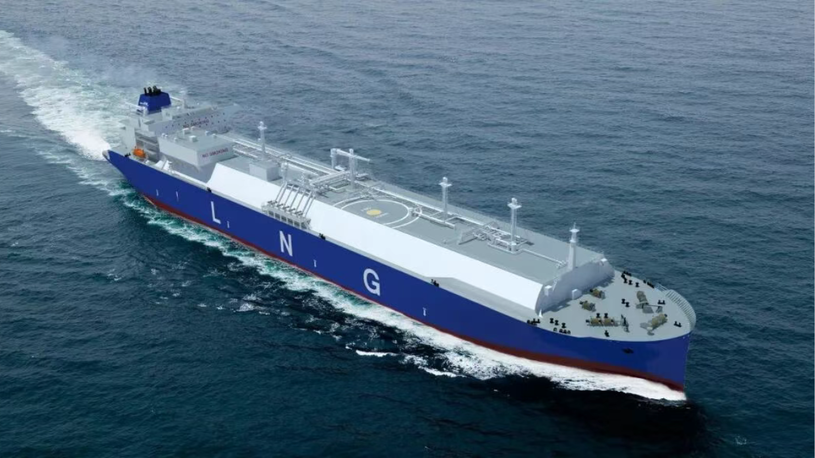
Greece is also a major player in the LNG carrier market, owning 169 LNG vessels or 25% of the existing fleet. The rest of the Greek-owned fleet includes 528 container ships, 153 LPG carriers, and 72 vehicle carriers, among others.
Decarbonisation efforts
Discussing the industry’s transition toward sustainability, Melina Travlos emphasised that the Greek fleet leads the world in operations using alternative fuels. According to UGS data, 7% of Greek-owned vessels are equipped with LNG dual-fuel engines.
Greek shipowners have also made significant investments in exhaust gas cleaning systems, with 66% of Greek tankers under construction set to be fitted with scrubbers, outpacing the global average of 57%.
Moreover, 43% of the Greek-owned fleet is equipped with energy-saving technologies, compared with 39% of the global fleet.
Sign up for Riviera’s series of technical and operational webinars and conferences:
- Register to attend by visiting our events page.
- Watch recordings from all of our webinars in the webinar library.
Related to this Story


Events

Maritime Regulations Webinar Week
 16 Dec 2025
 GMT - ONLINE
Floating energy: successfully unlocking stranded gas using FLNGs and FSRUs
24 Feb 2026GMT - ONLINE
© 2026 Riviera Maritime Media Ltd.


