


Business Sectors
Business Sectors
Events
Contents
International community falls short of adopting landmark rules to cut shipping emissions
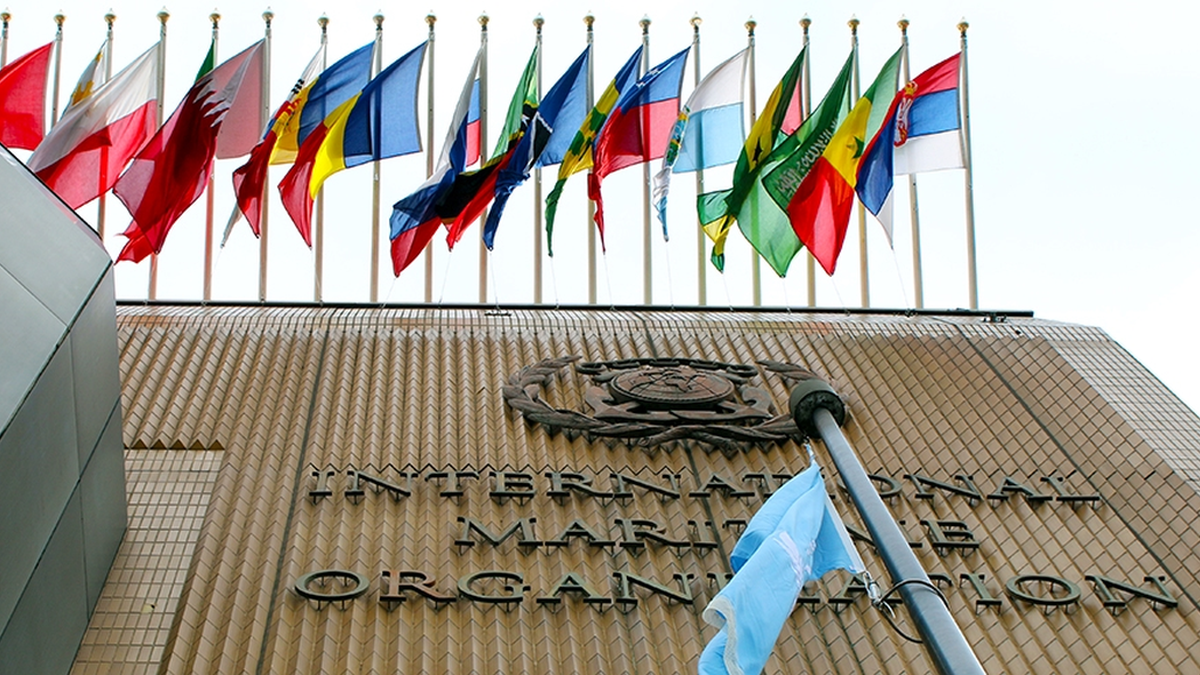
Procedural delays lead to vote for year-long postponement of discussions on a net-zero emissions plan at the UN-based International Maritime Organization (IMO) in London


An extraordinary session of IMO’s Marine Environment Protection Committee (MEPC) adjourned on 17 October 2025 without adopting a landmark treaty that could have – and may still – become the first legally-binding global rules setting out technical and economic measures that would lead an industry down a timeline of targets to decarbonise operations to the point of net zero.
Under discussion were additions to the maritime pollution treaty, Marpol, that includes the Net-Zero Framework (NZF). The NZF is made up of two main decarbonisation requirements: a global fuel standard to move away from heavily polluting fuels and a global GHG emissions pricing mechanism, often referred to as a carbon tax.
Allegations of behind-the-scenes diplomatic pressure tactics during the MEPC meeting surfaced in news reports that followed the vote to delay, by a year, addressing the approved amendment to the maritime pollution treaty. Back-channel negotiations were also referenced, including a mention by the chair of the MEPC, as ’corridor diplomacy’, during proceedings.
In public, procedural wrangling markedly slowed the discussions at shipping’s international regulator, IMO, and talks were abruptly suspended on 16 October for a ’consultation’ requested by the US delegation before resuming on 17 October.
Among a series of proposals, the US and Saudi Arabia proposed changing IMO’s regular adoption process by consensus to an ‘explicit’ adoption process which would impose additional hurdles to bring the framework into force.
The morning session on 17 October saw tacit approval by the full IMO body of a work plan to develop work streams to address various areas of the NZF, but a series of proposals and, eventually, motions to vote soon surfaced, with the committee seeking legal clarification on procedures and, ultimately taking a lengthy suspension.
One proposal, from the UAE, that made it into the unanimously approved work plan was language to make the NZF "the only global maritime midterm measure for international shipping".
As afternoon talks began, the committee recognised Saudi Arabia, which put forward a motion to adjourn the talks and re-open them at a later date. Pressed for specifics by the MEPC chair, the Saudi delegation specified adjournment for one year. The rationale for the adjournment was to "take a pause and choose unity", to "choose unity and a commitment to work with each other and speak with each other".
The motion went to a vote, with 57 states voting to adjourn and 49 states voting to continue the session. With only a simple majority of 54 votes needed, the MEPC voted to break up proceedings and approve the Saudi motion. The outcome also included 21 abstentions, with notable abstentions from Greece and Cyprus, both major shipowning nations within the European Union (EU), which broke from the majority of the EU bloc’s votes to continue.
NZF still ’very much alive’
With years of negotiations behind the shipping decarbonisation amendments that include the Net-Zero Framework, and an April 2025 vote that approved the amendments to Marpol, the move to adjourn was not widely expected.
Despite the delay and uncertainty about its adoption, during a press conference following the closure of proceedings, IMO Secretary General Arsenio Dominguez said the existing framework plan remained on the table and ’very much alive’.
"The framework is not adopted, but we were already working on developing the guidelines [if] the framework [had been] approved. So the amendments remain approved. The session has been adjourned to continue in one year, again, to address the adoption of the amendments," he said.
Asked if the adjournment was a ’blow’ to IMO, with alleged reports from delegates that "outside pressure [is] what dictated the outcome" of the vote, Mr Dominguez said he did not see it that way, while noting the particular challenges and weighty geopolitical stakes that surround climate agreements.
"It wasn’t the normal meetings of IMO, but this is a topic that, you know, transcends IMO," he said. "The geopolitics in the world right now makes it, as well, more challenging for us to make progress in certain topics. But I will maintain that member states have the right to express their opinion, to negotiate amongst each other. I’m not here to qualify that. I’m here to continue to work with all of them... and that’s why there’s further work, not only on the guidelines, but the negotiations that will continue to take place in between now that we have adjourned and when we resume in a year’s time."
Pointing out IMO’s "main framework" rules on greenhouse gas emissions (GHG) remain "the basis for any discussions," Mr Dominguez said the organisation can still move forward on several fronts.
"We’re still calculating and providing information annually in relation to the efficiency of shipping made on the data collection systems. The goals that remained in the 2023 IMO agenda, [they] remain there as indicative goals," he said, in reference to a 2023 revision to the IMO GHG strategy that saw the organisation set target reductions for 2030, through to targeting a reduction of GHGs to net zero by or around 2050.
"And of course, with the technical measures, as I said in the past, we can still move forward in relation to meeting the [total annual GHG reductions form shipping] of 20% and striving for 30% [by 2030]. And of course, there are many proactive actions that can take place to continue to incentivise the transition of shipping... and allow us to meet the other goal of uptake of alternative fuels," he said.
According to IMO, the 2023 IMO GHG Strategy also includes a level of ambition relating to the uptake of zero or near-zero (ZNZ) GHG emission technologies, fuels and/or energy sources which are to represent at least 5%, striving for 10%, of the energy used by international shipping by 2030.
Reactions to the delay in adopting a net-zero framework
A host of organisations published reactions to the early adjournment, without a decision, of the IMO meeting that had been expected to address and potentially set formal, binding requirements for the decarbonisation of the shipping sector over the next 25 years.
“Today’s adjournment is a disappointing setback for shipping, but not the end of this journey. The adjournment for a full year creates serious challenges for meeting the timelines in the Net-Zero Framework agreed in April and will make delivery of the sector’s decarbonisation targets even more challenging," said director of decarbonisation for the non-profit maritime decarbonisation facilitator Global Maritime Forum, Jesse Fahnestock.
“We encourage member states that agreed on the framework in April to reconfirm their commitment to multilateralism and continue the urgent work of developing guidelines and adopting a regulatory framework that can deliver on IMO’s unanimously agreed Greenhouse Gas Strategy,” he said.
The EU called the delay "regrettable," and said it remained committed to "an ambitious, science-based global framework" to decarbonise shipping through a "just, equitable" transition.
UCL Energy Institute Professor of Energy and Transport Dr Tristan Smith said, “This is catastrophic for confidence, and therefore also for the equitable and ambitious decarbonisation we need. We will now have to double-down on other means to drive shipping GHG reduction and energy transition. Climate science tells us that the challenge of decarbonisation does not go away, it gets harder. This delay therefore means those with the means must step up and lead more than ever, until this multilateral process can regain its composure.”
ICS Secretary General Thomas A Kazakos said his organisation is "disappointed that member states have not been able to agree a way forward at this meeting. Industry needs clarity to be able to make the investments needed to decarbonise the maritime sector, in line with the goals set out in the IMO GHG strategy. As an industry we will continue to work with IMO, which is the best organisation to deliver the global regulations needed for a global industry.”
New evidence shows benefits of ’stringent climate policies’
A new study by by the Euro-Mediterranean Center on Climate Change (CMCC) shows that pursuing net-zero climate policies and avoiding temporary overshoot of the 1.5°C temperature limit set in the UN’s Paris Agreement on climate change could prevent 207,000 premature deaths and save billions of dollars in economic damages by 2030 by improving air quality. The research highlights that ambitious climate action not only limits global warming but also delivers immediate health and economic "co-benefits, providing strong evidence for the importance of stringent mitigation policies worldwide".
"Air pollution is one of the world’s leading health risks, contributing to nearly 1 in 8 deaths globally. A new study published in Science Advances... shows that stringent climate policies designed to avoid temporarily exceeding 1.5°C warming could prevent hundreds of thousands of premature deaths while avoiding trillions of dollars in economic damages," the CMCC said
Riviera’s Maritime Decarbonization Americas Conference will be held in Houston, Texas, 22-23 January 2026. Click here for more information on this industry-leading event.
Related to this Story


Events

Maritime Regulations Webinar Week
 16 Dec 2025
 GMT - ONLINE
Floating energy: successfully unlocking stranded gas using FLNGs and FSRUs
24 Feb 2026GMT - ONLINE
© 2026 Riviera Maritime Media Ltd.


