


Business Sectors
Business Sectors
Events
Contents
Register to read more articles.
Stern test for Parat Halvorsen’s breakthrough boiler
Boiler provides operational versatility, generating steam using electrical power or traditional energy sources


Boiler specialist Parat Halvorsen has supplied its MCS exhaust gas, fuel-fired electrical boiler for a new stern fishing trawler built by Vietnamese shipyard Vard Vung Tau.
Notably, the boiler can produce steam with electrical power, as well as via more traditional sources. Immersion heaters can run on 400 or 690 low-voltage, delivering up to 600 kW. “So if the electrical power is available and is preferred to diesel, this is a good opportunity for the operator,” explains a Parat spokesperson.
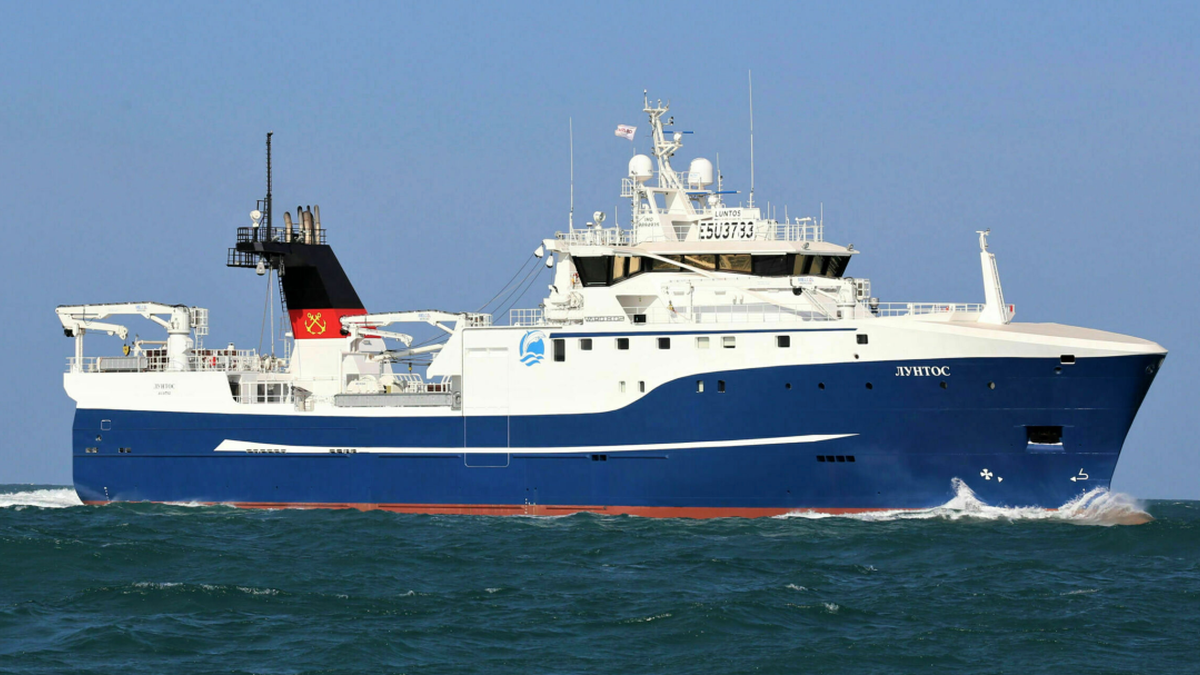
Commissioned by Russian deepwater fishing company Luntos, the 87 m stern trawler of the same name operates in the arduous conditions of the Russian Economic Fishing Zones and Western Bering Sea.
A Vard 8.04 design, the fishing vessel is specially configured for these harsh regions and needs the most efficient and environmentally friendly power sources it can get. Freezing capacity has to be maintained at 210 tons every 24 hours to preserve fish quality, while the onboard fish meal plant requires a raw material handling capacity of 50 tons every 24 hours, quite enough to put pressure on the boiler system.
As a Parat spokesperson explains, the breakthrough provides its traditional boiler with a new lease of life. Its MCS boiler has long been widely used on trawlers because it can use heat from the engine exhaust to produce steam for onboard use.
“Often the steam system is connected to the hot water heating system onboard, not just for the factory operations. If the boiler can’t produce enough steam from the exhaust, it falls back on a diesel burner installed in a separate section,” says the company.
“If the electrical power is available and is preferred to diesel, this is a good opportunity”
However, the latest electrical circulation steam (ECS) boiler, can be installed in traditional circulation-type steam boiler systems while also drawing from electrical power. “It is a small unit and can be fitted in enginerooms where space is usually very limited,” the spokesperson adds.
Added together, the boiler can tap into shore power, it can boost the power generator, and it can burn fish oil. Hence, three-in-one.
As Parat points out, this versatility means that in port the vessel eliminates carbon emissions while it can also be used as back-up power at sea, thus boosting generators while reducing fuel consumption. The versatility is enhanced by the more powerful 600 kW electrical elements, allowing it to be connected for 400, 440 or 690 volts, according to the vessel’s power distribution system.
As a bonus, existing combined boilers can be upgraded with the Parat ECS electrical-circulation boiler to get the same benefits as the three-in-one breakthrough. As the maritime industry becomes increasingly emissions-conscious, an ECS-integrated boiler means vessels can maintain steam pressure from an electrical power source, whether on shore or from a spare generator.
The latter option is proving popular in an emissions and cost-conscious era. The manufacturer says it is booking strong demand for retrofits. “We see more and more interest in integrating additional electrical power in existing systems,” Parat says. “Clients are looking for flexibility in their choice of heating source.”



Related to this Story

Events

Maritime Regulations Webinar Week
 16 Dec 2025
 GMT - ONLINE
Floating energy: successfully unlocking stranded gas using FLNGs and FSRUs
24 Feb 2026GMT - ONLINE
© 2026 Riviera Maritime Media Ltd.


