


Business Sectors
Business Sectors
Events
Contents
Register to read more articles.
How CO2 capture and storage in maritime has developed in 2024
Advances in CO2 capture, shipping and storage are shaping maritime decarbonisation, but economic and logistical hurdles remain key challenges


The maritime industry in 2024 has seen a surge of innovation in carbon capture and storage (CCS), alongside the development of liquefied CO2 (LCO2) shipping and terminal infrastructure.
However, these advancements continue to wrestle with economic and logistical barriers that hinder broader adoption.
At the forefront of CO2 transport is the Northern Lights project, a joint venture between Equinor, Shell and TotalEnergies. The project launched its first two dedicated LCO2 carriers this year, with Northern Lights’ shipping and commercial manager Baris Dolek highlighting their operational readiness.
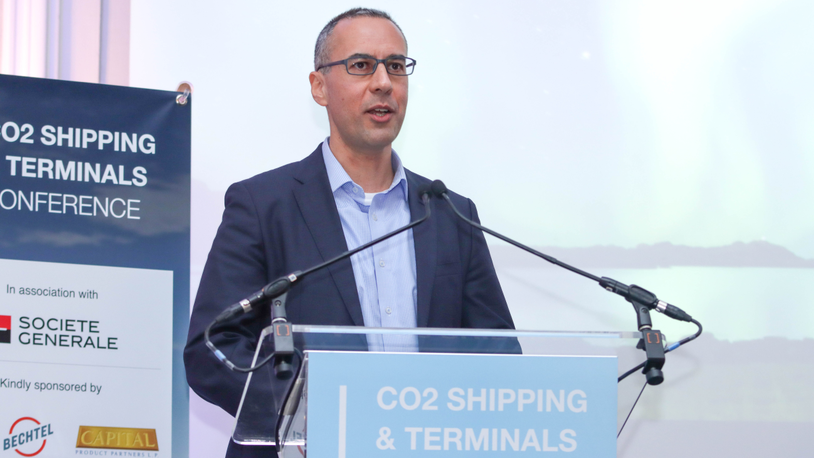
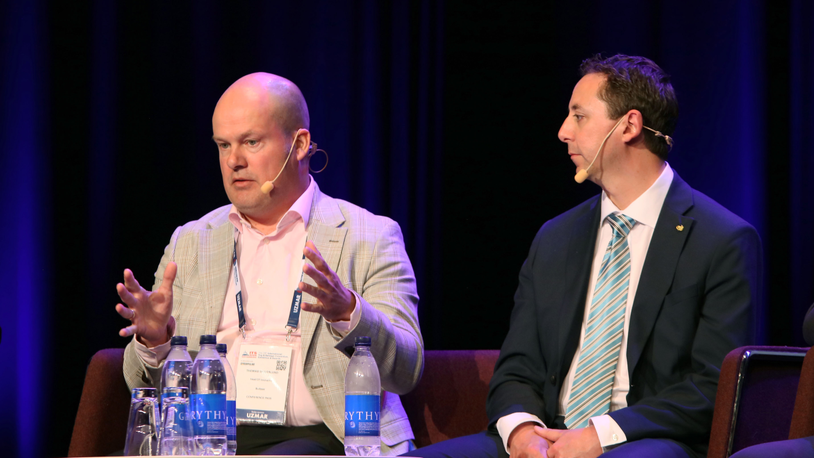
“Our first two CCS ships are operational this year, showcasing what is achievable when subsidies and collaboration align,” he noted at Riviera’s CO2 Shipping & Terminals Conference in June 2024. Yet, Mr Dolek acknowledged CCS remains economically challenging, stating, “CCS is still not in money.”
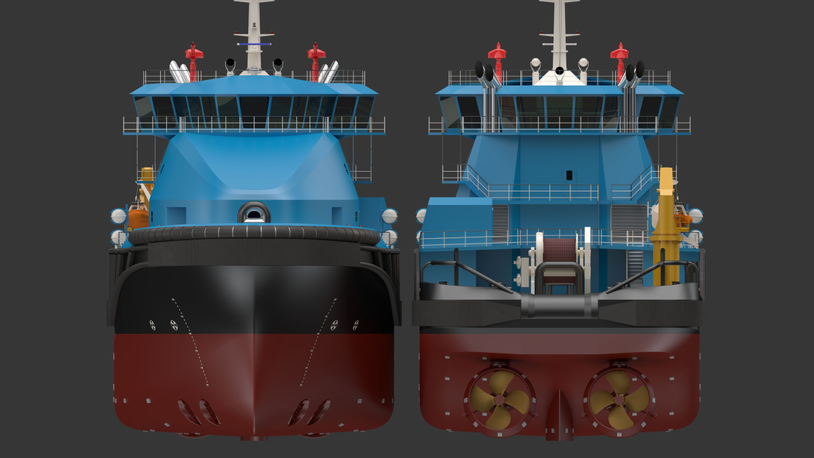
Developments in LCO2 carrier designs are also accelerating. Greek shipowner Capital Clean Energy Carriers has invested in innovative dual-purpose vessels capable of carrying LCO2, ammonia and LPG. Capital Gas technical director Alexandra Xystra remarked on the company’s strategy, “These trailblazing vessels set a new standard in trading flexibility, responding to the future needs of CO2 transport.”
Shipboard carbon capture technologies are gaining traction but remain constrained by spatial and energy demands. Stena Bulk’s MR2 product tanker Stena Impero recently demonstrated a modular onboard carbon capture system that achieved a 20% emissions reduction. Stena Bulk chief executive Erik Hånell noted, “Further research and development will reduce costs, making onboard carbon capture viable for the wider industry.”
Terminals receiving CO2 have also come under scrutiny for their handling of impurities in vapour returns. Clarksons Green Transition Group’s Johan Tutturen highlighted the corrosive risks associated with mixed impurities, a challenge that must be addressed as CO2 volumes increase. “Impurities in CO2 streams require rigorous management to avoid corrosion and ensure safety,” he stressed.
Underground storage projects continue to expand globally. Altera Infrastructure’s Stella Maris CCS project aims to store 10M tonnes of CO2 annually in the Norwegian North Sea.
Speaking at the CO2 Shipping, Terminals & CCS Conference, Americas in Houston in September 2024, Altera project manager Frank Wettland outlined the company’s strategy, “We control the full value chain, from onshore collection to offshore injection, offering emitters a turnkey solution.”
While the industry has made progress in vessel designs, terminal operations and regulatory discussions, achieving widespread adoption will depend on economic feasibility and the development of standardised frameworks.
Riviera’s CO2-focused events in 2024 brought clarity to these advancements. The London conference emphasised the importance of scaling up infrastructure, while the Americas event in Houston addressed regulatory and technical hurdles.
These forums have become vital in uniting stakeholders across the CO2 value chain, driving forward solutions for a decarbonised maritime sector.
Related to this Story

Events

Maritime Regulations Webinar Week
 16 Dec 2025
 GMT - ONLINE
Floating energy: successfully unlocking stranded gas using FLNGs and FSRUs
24 Feb 2026GMT - ONLINE
© 2026 Riviera Maritime Media Ltd.


