


Business Sectors
Business Sectors
Events
Contents

Register to read more articles.
Hydrogen – rewriting the rules of marine propulsion
The float-out of Viking Libra advances Viking’s vision of using liquefied hydrogen as a ‘true zero-emissions’ fuel, with the cruise ship destined to enter service in late 2026


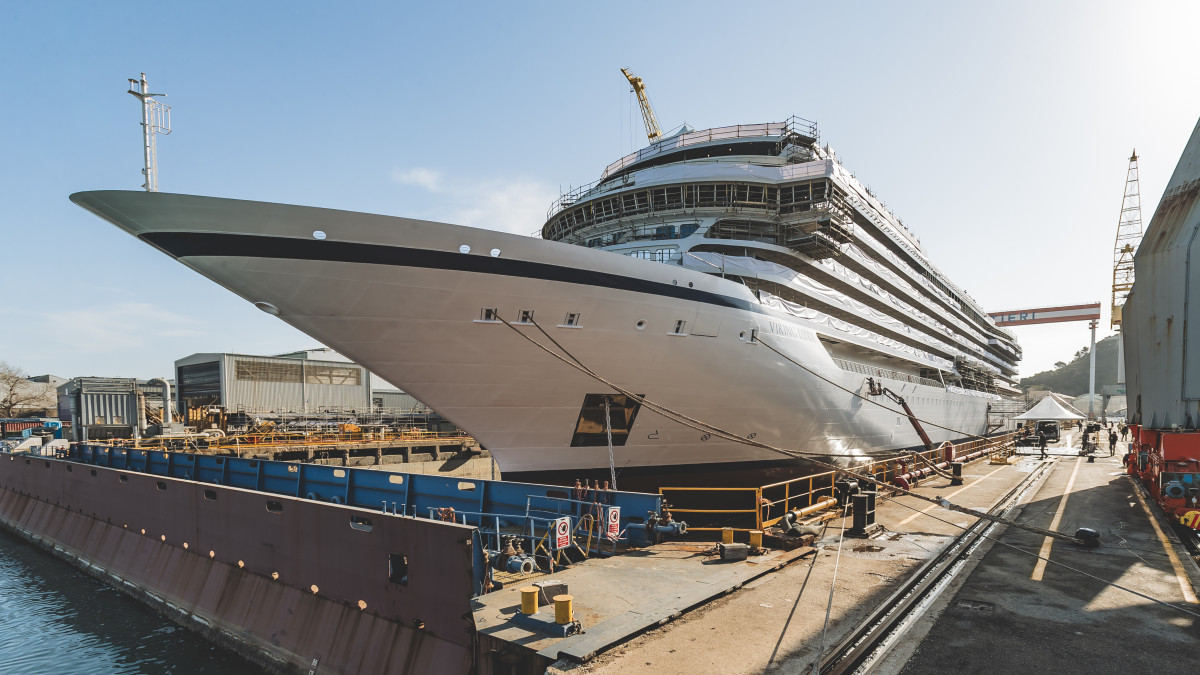
On 19 March 2026, a ceremonial cord was cut at Fincantieri’s Ancona shipyard and water began to flood a building dock. Two days later, a 54,300‑gt cruise ship floated free for the first time. A routine operation, but what it represented was anything but.
For more than a decade, hydrogen has occupied an awkward position in the maritime decarbonisation debate. Admired for its environmental credentials, perpetually deferred on grounds of cost and complexity, and constrained by the near‑impossible physics of storing a gas that must be chilled to -253°C to remain liquid. The float‑out of Viking Libra was a turning point, from the theoretical to the physical.
“The design philosophy is one of significant hydrogen integration”
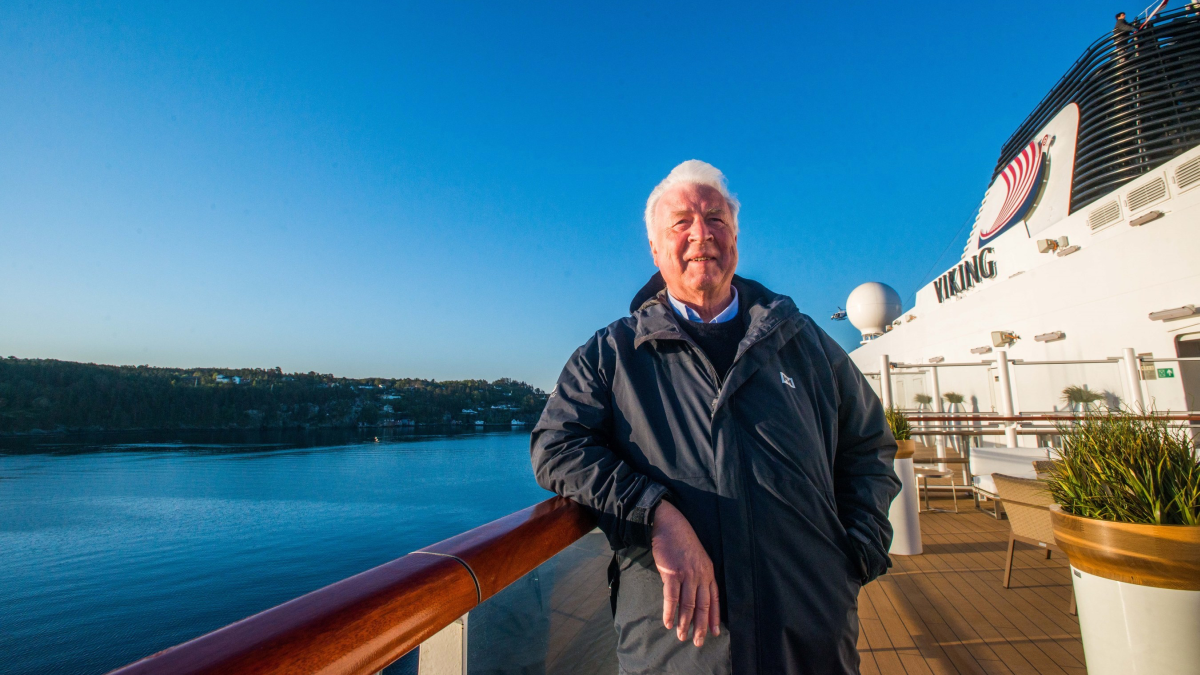
Commenting on the milestone, Viking chairman and chief executive, Torstein Hagen, was unambiguous about the intent behind the investment. “From the beginning, our approach to ship design has focused on reducing fuel consumption, and Viking Libra is our most environmentally friendly vessel yet. Investing in hydrogen was a principled choice for Viking, offering a true zero‑emission solution, and we look forward to welcoming the world’s first hydrogen-powered cruise ship to our fleet.”
Following the ceremony, the ship was moved to an adjacent outfitting dock for final construction and interior fitting‑out, with delivery scheduled for November 2026 and an inaugural season spanning Mediterranean and Northern Europe itineraries. Given that Viking’s next ocean newbuilding, Viking Astrea, under construction and due for delivery in 2027, will also be hydrogen‑powered, Viking Libra is not a single experiment but the opening of a series.
PEM technology
The vessel itself is compact by modern cruise standards: 54,300 gt, 499 staterooms, capacity for 998 guests. That scale is not incidental. It reflects the operational logic of hydrogen in its current state of development: a ship large enough to matter commercially, yet small enough to be sustained by the hydrogen supply infrastructure that can realistically be assembled at today’s selected port calls. Viking appears to have designed Viking Libra around this consideration as much as around the technology.
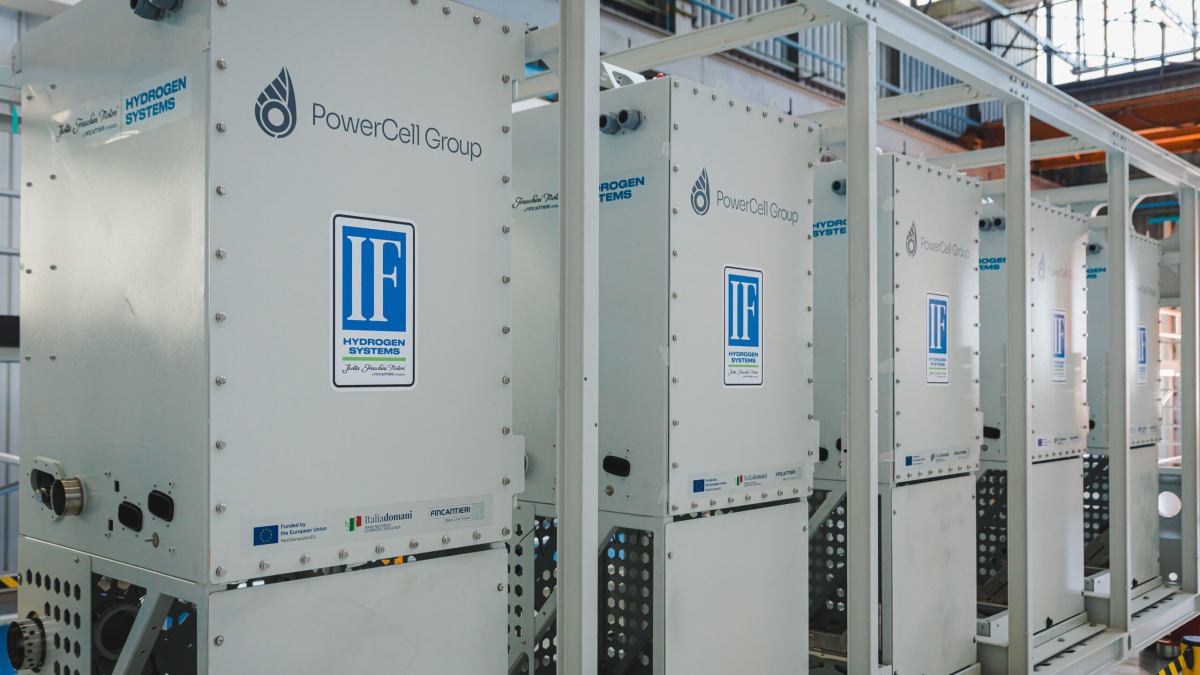
The propulsion system at the heart of the ship is a hybrid arrangement based on liquefied hydrogen and proton exchange membrane (PEM) fuel cells, with the fuel-cell package supplied by Isotta Fraschini Motori, the Fincantieri subsidiary specialising in advanced fuel-cell technology.
“The entire exhaust product is water”
The system is designed to produce up to 6 MW of electrical power, the equivalent of approximately 8,000 hp of generator capacity. Six megawatts is a substantial contribution to a ship’s power budget for hotel services, manoeuvring and low‑speed propulsion, but it sits within a hybrid arrangement rather than replacing the vessel’s entire generation capacity. The design philosophy is one of significant hydrogen integration alongside conventional systems, not total replacement of them.
This is not Fincantieri’s first step on this path. The shipbuilder previously installed an experimental PEM hydrogen fuel cell module aboard Viking Neptune, a much smaller unit delivering 100 kW of nominal power, fuelled by hydrogen gas with room‑temperature air. That system was low‑temperature PEM technology in its most elemental shipboard form: a proof of concept, carefully documented and used to set the engineering targets for what came next. Viking Libra represents the realisation of those targets, stepping up by a factor of 60 in power output and integrating liquefied hydrogen storage at a scale that has never previously been attempted on a cruise vessel.
Quiet power
Understanding what a PEM fuel cell does, and why it represents such a departure from conventional shipboard power generation, is essential context. Since the earliest days of steam, power at sea has meant heat, noise, and rotation. A fuel pump starts clicking, cylinders begin firing, a crankshaft turns. That mechanical rhythm has defined the engineroom for over a century. A PEM fuel cell breaks every part of that convention.
At its heart, the process is electrochemical rather than thermal. Hydrogen enters one side of a thin polymer membrane, the membrane itself being a specialised material, typically Nafion or a comparable perfluoro‑sulphonic acid polymer, only a fraction of a millimetre thick yet highly selective in what it allows to pass. Oxygen from compressed air enters the other side. A platinum catalyst at the anode strips hydrogen molecules of their electrons. The protons migrate through the membrane under an electrochemical potential gradient, while the electrons are forced around an external electrical circuit, generating direct current before recombining with oxygen at the cathode to form water vapour. The entire exhaust product is water. No CO2, no SOx, no particulate matter, and at cruise loads, almost no noise beyond the hum of air compressors and cooling circuits.
“Batteries are invariably incorporated alongside fuel-cell stacks”
The efficiency advantage over combustion is real but requires qualification. A diesel generator converts fuel energy to electricity at perhaps 35–42% thermal efficiency under favourable conditions. A PEM fuel cell operating at design load can achieve electrical efficiencies of 50–60% because it bypasses the thermodynamic losses inherent in converting heat to mechanical work. At the steady hotel loads that dominate a cruise ship’s energy budget, this advantage is practically significant. It diminishes under dynamic conditions, which is one reason why batteries are invariably incorporated alongside fuel-cell stacks in marine installations: they absorb the rapid load transients that would otherwise force the fuel cell away from its optimal operating point.
The balance of plant surrounding the fuel cell – the air compressors, humidifiers, cooling circuits, power electronics and gas management systems – represents much of the real engineering challenge. PEM membranes must be maintained within a narrow window of temperature and humidity. Too little moisture and the membrane dries out, driving up electrical resistance and reducing output; too much and the cathode floods, starving the reaction of oxygen. Maintaining that balance aboard a moving vessel, with varying sea conditions, fluctuating loads, and the vibration environment of a working ship, demands sophisticated monitoring and control systems that are unique in a conventional engineroom.
A culture change in the engineroom
For engineers raised on rotating machinery, the cultural adjustment is considerable. A diesel generator can be coaxed through poor fuel quality, pushed through load steps with a cloud of black smoke, and nursed along while a fault is diagnosed. A fuel cell is less forgiving. Its protective logic is designed to prevent thermal hotspots and hydrogen accumulation, and the consequence of a serious fault is typically an abrupt shutdown rather than a gradual decline.
Redundancy must therefore be engineered in from the outset through multiple parallel stacks, and the energy management software that balances output between stacks, batteries and any remaining conventional generators takes on a role previously filled by the judgement of an experienced watch engineer. The maintenance culture shifts accordingly: no piston overhauls, no turbocharger balancing, no fuel injection timing, but instead tracking voltage degradation across stacks, ensuring air filtration systems remain clean, and maintaining cooling circuits with the precision usually associated with high‑power electronics.
Storage is one of the biggest challenges in using hydrogen as a fuel. Although hydrogen carries a lot of energy for its weight, its volumetric energy density is catastrophically low, so it takes up a huge amount of space. To store enough of it on a ship, it must either be compressed into very high‑pressure tanks at somewhere between 350 and 700 bar, or cooled to extremely low temperatures of about -253°C to become liquid. Both options are complex, very energy‑intensive and demand insulated cryogenic vessels with continuous boil‑off management systems to handle the inevitable heat ingress. This requires specialised equipment and makes storage far more difficult than with conventional marine fuels.
“A fuel cell is less forgiving”
Viking and Fincantieri have addressed the bunkering logistics challenge through a containerised approach to hydrogen storage and loading; a system designed to allow hydrogen to be delivered and loaded in standardised units without requiring the shore‑side infrastructure investment of a permanent cryogenic terminal at every port of call. The practical ingenuity of that solution should not be underestimated.
The environmental credentials of the system depend entirely on a question that sits well upstream of the ship itself: where did the hydrogen come from? The maritime industry has adopted a colour‑coding shorthand that illuminates the issue. Grey hydrogen, which accounts for most of global production, is manufactured by reacting natural gas with steam in a process known as steam methane reforming, producing hydrogen and roughly 9–12 kg of CO2 for every kilogram of hydrogen. Blue hydrogen follows the same route but captures a proportion of the CO2, and the carbon storage infrastructure adds considerable cost and complexity. Green hydrogen removes fossil fuels from the equation entirely, splitting water into hydrogen and oxygen using electrolysis powered by renewable electricity. If that electricity is genuinely low‑carbon, the resulting hydrogen can approach true zero‑emissions status across its entire lifecycle.
That lifecycle view is now central to how IMO regulates the industry. The Net‑Zero Framework approved at MEPC 83 in April 2025 measures greenhouse gas fuel intensity on a well‑to‑wake basis, tracing emissions from primary production all the way through to onboard consumption. The old tank‑to‑wake approach counted only what emerged from the exhaust stack; the switch to well‑to‑wake was a deliberate regulatory choice designed to prevent upstream emissions being laundered through low‑carbon conversion steps at the point of use. Grey hydrogen consumed in a fuel cell that emits only water vapour is not, under this framework, a low‑carbon solution. Green hydrogen, produced from renewable electricity, can achieve a near‑zero well‑to‑wake score and qualify for the compliance incentives built into the mechanism. The regulatory architecture is aligned with the physics.
The economics currently favour grey hydrogen by a considerable margin. Green hydrogen costs between three and eight dollars per kilogram to produce, against one to two dollars for the grey variety, and the infrastructure required for cryogenic storage and delivery adds further to the delivered cost. The premium over conventional marine fuels is real and substantial. Yet electrolyser costs are falling at a pace that has consistently surprised analysts, renewable electricity is becoming cheaper across every major market, and carbon pricing mechanisms are progressively tightening the financial case for high‑emissions fuels.
Viking acknowledged the current cost differential explicitly when announcing the project, while stating confidence that prices would fall over time. That is not an evasion; it is the same trajectory calculation that drove investment in LNG a decade ago, now applied to a fuel with genuinely better emissions credentials when produced cleanly.
Fincantieri CEO, Pierroberto Folgiero, framed the project’s significance from the shipbuilder’s perspective: “With Viking Libra, we are not only delivering the world’s first cruise ship powered by hydrogen stored on board, but also reinforcing our commitment to shaping the future of sustainable maritime transportation.” That distinction – hydrogen stored on board for both propulsion and electricity generation, not merely trialled as an auxiliary – is the engineering threshold that separates Viking Libra from earlier demonstration projects.
The containerised storage system, the 6‑MW fuel-cell installation, and the integration of liquefied hydrogen into the operational profile of a commercial passenger vessel represent a new level of commitment to the technology.
When Viking Libra enters service it will generate operational data on fuel-cell stack durability, hydrogen consumption rates, bunkering logistics, maintenance cycles and the response of PEM systems to the real‑world conditions of a working passenger ship. That evidence base does not currently exist anywhere in the industry at this scale. Industry will be watching the operational record closely. So will every cruise operator that is considering a hydrogen newbuilding programme.





Related to this Story


Events

Maritime Regulations Webinar Week
 16 Dec 2025
 GMT - ONLINE

Floating energy: successfully unlocking stranded gas using FLNGs and FSRUs
24 Feb 2026GMT - ONLINE
© 2026 Riviera Maritime Media Ltd.


