


Business Sectors
Business Sectors
Events
Contents
Salvors prevent 3M tonnes of potential pollution in 2025
International Salvage Union members safeguarded marine environments by conducting 231 services to vessels carrying potentially polluting cargo and fuel during 2025


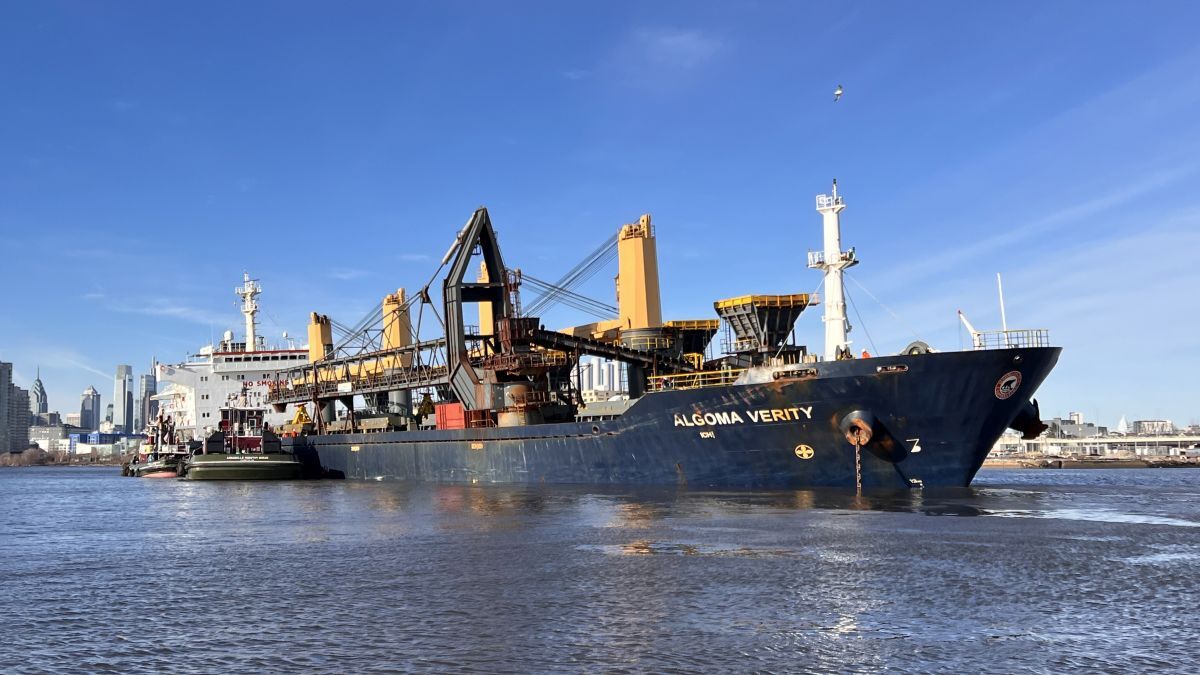
Salvage companies prevented 3M tonnes of pollution from the world’s marine environment through emergency towage, refloats and wreck removals in 2025, up almost 600,000 tonnes, or 25%, from 2024.
Pollutants saved in 2025 included 1.2M tonnes of dry bulk, 1M tonnes of containerised cargo, nearly 506,000 tonnes of crude oil, 127,000 tonnes of refined products and 78,000 tonnes of bunker fuel.
These pollutants were saved by International Salvage Union (ISU) members through 231 services to vessels, up from 162 in 2024, a 43% year-on-year increase. The data comes from the ISU’s Annual Pollution Prevention Survey for operations in 2025, which relies on replies from members.
ISU president, Leendert Muller, said this data demonstrates the vital role of professional salvors in protecting the marine environment.
“ISU members are in most cases the only resource available to prevent a marine casualty from becoming an environmental disaster,” he said.
“This survey shows clearly how important our members are to the shipping industry but also to wider society. And we reduce the exposure of shipowners and their insurers to potentially huge costs and reputational damage.”
Each year there can be significant variations in the quantities of pollutants in each category, depending on the number of accidents involving tankers, bulk carriers and container ships.
“Capabilities to deal with casualties and incidents is essential and needs to be properly funded”
Casualties involving very-large crude carriers or ultra-large container ships can sway the data year to year. For example, containerised cargo was up 69% to more than 1M tonnes and crude oil was 26% higher in 2025, versus 2024.
“Maintaining a professional salvage industry with the capability to deal with casualties and incidents wherever they occur is essential and needs to be properly funded,” said Mr Muller.
He highlighted how the professional salvage industry needs to be sustainable and commercially viable, which can be achieved through working with shipowners, operators and insurers.
“We must not take these capabilities or capacities for granted,” he said during the ISU members conference in London in March 2026.
“At the heart of commercial salvage is taking risks and using experience to respond to casualties.” Mr Muller continued.
“Salvage remains essential for environmental protection and pollution prevention at sea. We must not be careless. The salvage industry must be sustained.”
Pollutants rescued
Bulk cargo at 1.2M tonnes saved constituted 41% of the total pollution prevented in 2025 and was up 30% from 923,000 tonnes reported in 2024.
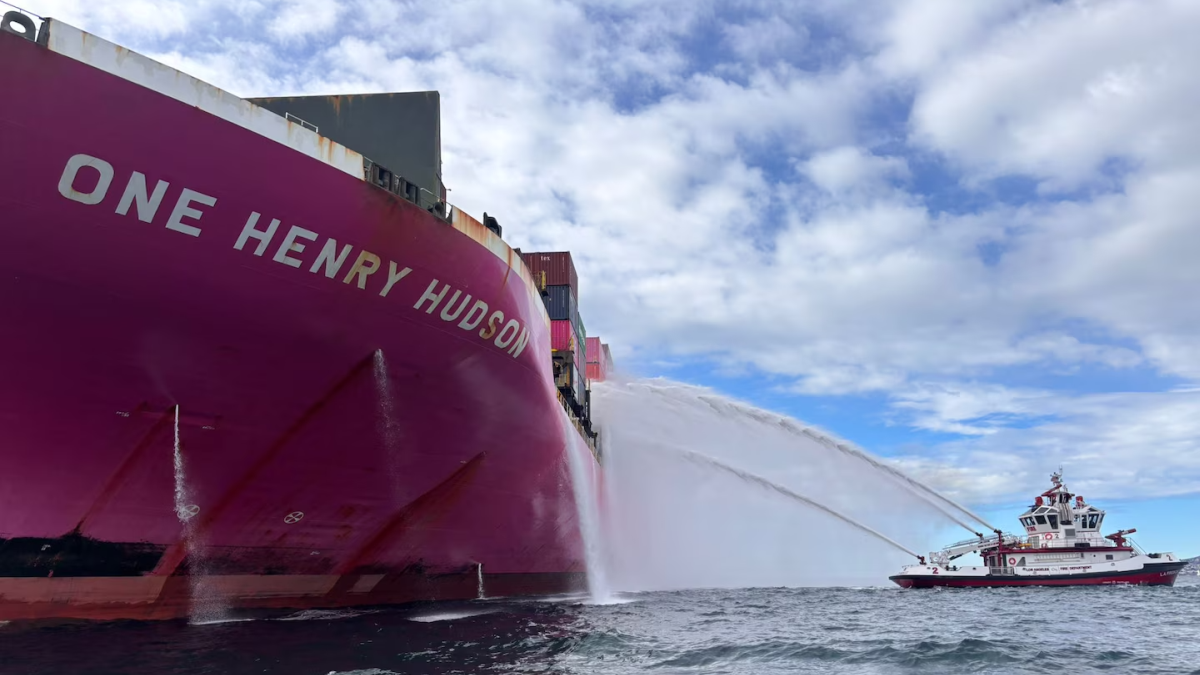
Containers, after bulk cargo, remain the most significant category of saved pollution (35% of the 2025 total) with ISU members providing services to vessels carrying 69,256 TEU last year, up from 40,974 in 2024.
ISU secretary general, James Herbert, highlighted the trends in the annual pollution prevention data with rising volumes saved in bulk, crude oil and containerised cargoes in the past three years.
“It is now commonly accepted that containers carrying a great variety of harmful and dangerous goods, including plastic pellets, are one of the biggest threats to the marine environment,” said Mr Herbert.
Around 17% of the 2025 total was crude oil, 4% refined products and 3% bunkers. Cargoes of refined oil products decreased in 2025 to 126,400 tonnes, while bunkers was 5% higher than in 2024, at 77,360 tonnes, and there was very little chemical cargo, just 8,722 tonnes, recorded in the survey.
However, the ISU noted that several members’ services in the survey did not record the quantity of bunkers or the cargo type “meaning the reported numbers likely represent a more modest total than the reality.”
Services rendered
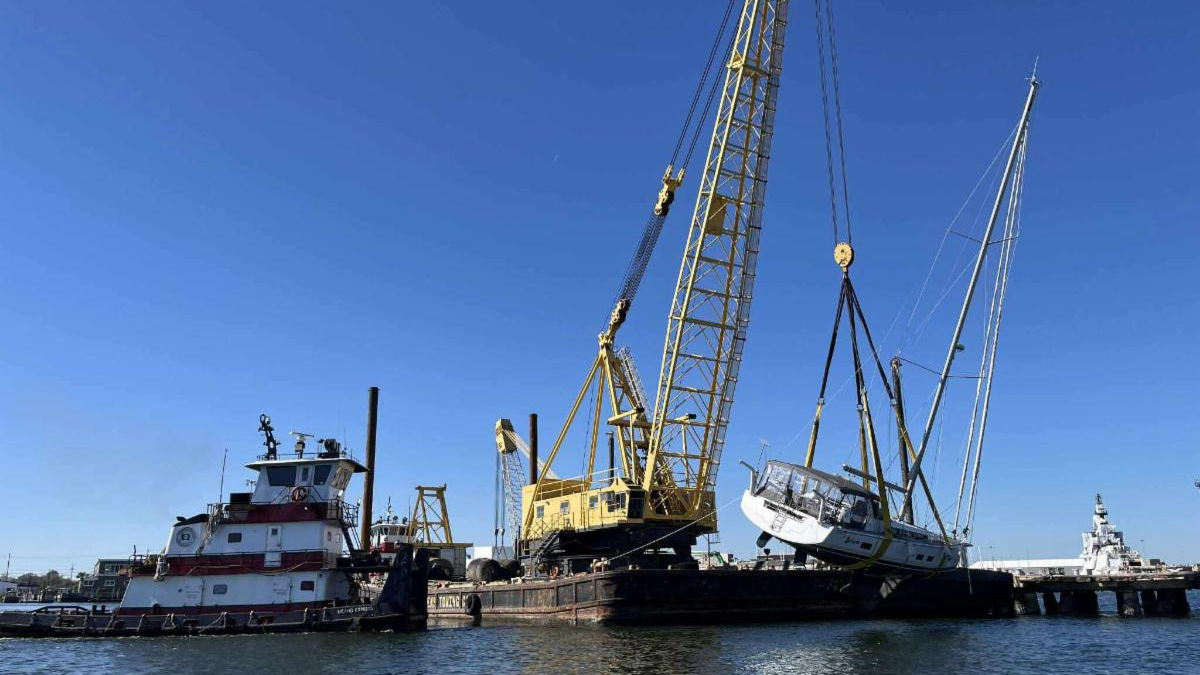
In 2025, ISU members undertook 42 wreck removal and marine services contracts, which was 18% of the 231 total, 53 commercial contracts (23%), 37 towage contracts (16%), 31 day-rate contracts (13%), 28 under Turkish forms (12%), 15 under Japanese forms (7%) and just 13 using Lloyd’s open forms (LOF), which is the lowest on record, and 12 under fixed price or lump-sum contracts.
Mr Muller was disappointed by the low number of LOF salvage contracts awarded in 2025 considering their fairness to salvors, insurers and owners in ensuring commercial salvors are readily available to respond rapidly to ship casualties. Most of the other contract types involve negotiation and company approvals that delay responses, he said.
“Many of these cases might have had real consequences and everyone in the shipping industry should ask the question ‘what if nothing had been done because no contractor was available’,” said Mr Muller.
Although some cases will have had limited danger to the marine environment, coastal infrastructure, ship, crew and cargo, others would have carried a real risk of causing injury, asset losses and substantial environmental damage.
ISU first conducted this survey in 1994, and the methodology was updated in 2014 to include a wider range of potential pollutants, including containers and hazardous and dirty bulk cargoes.
In the period 1994 to end-2025, ISU members have provided services to casualty vessels carrying 48.8M tonnes of potential pollutants, an average of 1.5M tonnes per year.
Warzone strife
Changes in regional and worldwide geopolitics made salvage much harder for providers in 2025, with conflicts and sanctions increasing physical and commercial risks and forcing many to avoid potential work.
As more ships were damaged by drones, missiles and unmanned surface vessels in the Middle East, Black Sea and Mediterranean, the list of casualties requiring assistance increased, but the ability to respond worsened.
Several salvage companies were asked to send people and assets to assist distressed ships across the Middle East, from Iraq to the United Arab Emirates (UAE) and Oman, but they were concerned for the safety of their personnel and those of subcontractors.
Protection and indemnity (P&I) insurance providers covering these damaged ships were also asking casualty representatives to fly out to stranded vessels to facilitate their salvage.
During March 2026, 23 ships were struck by projectiles in the Middle East region and Mediterranean as a result of the US/Israel-Iran conflict, mostly from Iranian weapons, according to the Royal Navy’s UK Maritime Trade Operations (UKMTO) Centre.
“If there was a major oil spill, there would be no way to salvage and protect the environment”
Salvors responding to damaged ships could have faced dangers from Iranian missiles and drones, limiting the viability of what could have been achieved.
Mr Muller said wars were “casting shadows over the salvage industry” while sanctions were deterring ISU members.
“We are in turbulent times, and this has increased due to armed conflicts with human suffering and impacts on global shipping and energy trades,” he said.
Mr Muller feared for the safety of seafarers trapped in the Middle East Gulf and those responding to casualties while ships were still being attacked.
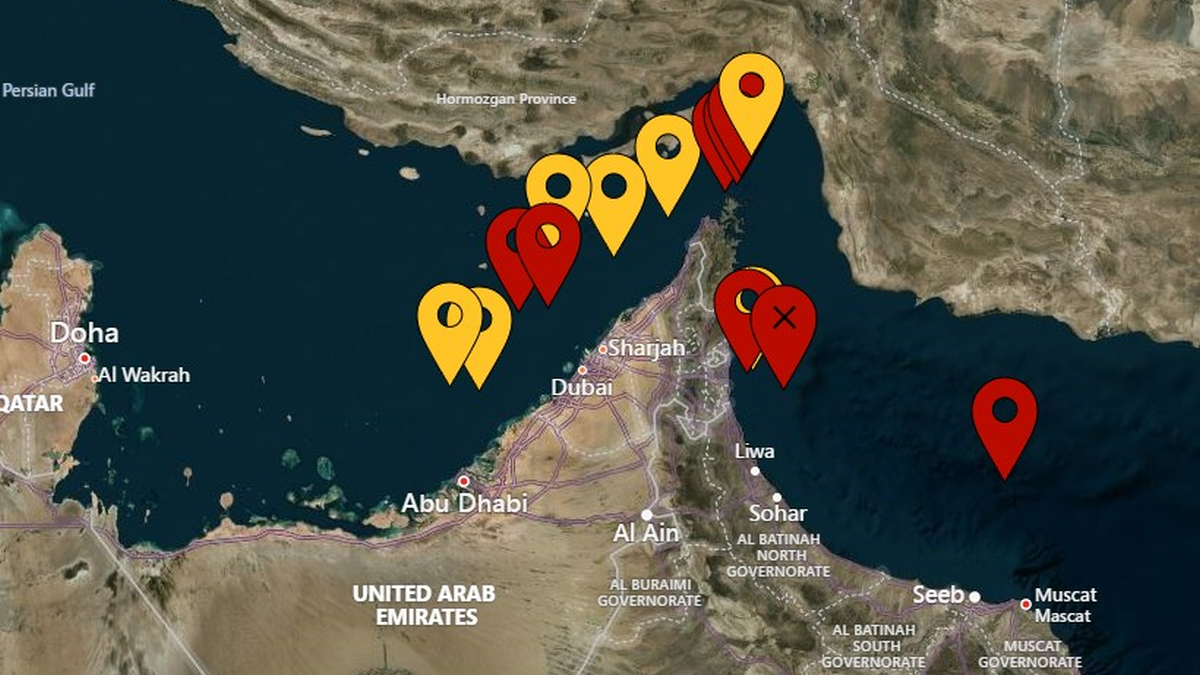
Four seafarers were killed and three injured when a tugboat from the UAE was destroyed by Iranian projectiles as it was sent to assist a missile-damaged container ship in the Strait of Hormuz.
According to the UKMTO, 2012-built tug vessel Mussafah 2 was struck by projectiles six nautical miles north of Oman on 6 March 2026, as it was steaming to assist stricken Malta-flagged Safeen Prestige, which had also been attacked by Iranian ballistic missiles, 18 nautical miles off Khasab, Oman.
Salvage providers feared a similar fate could befall their seafarers and assets if they were sent to assist damaged tankers, bulk carriers and container ships in the region.
Operations were also impacted by the extension from February of the war zone to incorporate the seas around the Arabian Peninsula, the western side of the Arabian Sea and into East Africa.
This has implications for war risk premiums and the ability of salvage providers to obtain approvals to operate in these areas.
IMO deputy director for the organisation’s marine environment division, Patricia Charlebois, said there have been at least 22 attacks on ships, leaving “several dead seafarers” and damaged vessels.
She said there were about 1,000 stranded tankers and 20,000 seafarers in the Middle East Gulf, as of 6 March, and huge cost increases for shipowners.
“War risk insurance premiums are up fivefold,” said Ms Charlebois. “If there was a major oil spill, there would be no way to salvage and protect the environment. It would be highly challenging.”
Salvors have some experience of assisting casualties of missile strikes in the Red Sea in the past two years. “Salvage in conflict zones require expertise, extra risk assessments, authority engagement and naval escorts,” said Ms Charlebois.
Sanction issues
Sanctions are also impacting ship salvage, with salvors increasingly questioning whether to respond to, and countries refusing support for, damaged ships carrying Russian oil and LNG that would be sanctioned by the US, European Union and UK.
In 2025, Five Ocean Salvage had to tow a damaged tanker carrying Russian oil from the Baltic Sea to Dakar, Senegal, because European nations refused to provide a place of refuge and any ship-to-ship transfers.
Five Ocean Salvage commercial director, Kyriakos Mitsotakis, said this tanker had lost propulsion in an ice sheet in the Baltic Sea while transporting oil from St Petersburg to Nigeria and had limped to Gotland Island, Sweden.
“Under a LOF, our only option was to tow the tanker to Dakar, for cargo discharge, a saga of 60 days of towage over 4,800 nautical miles to avoid adverse weather conditions,” said Mr Mitsotakis.
He thinks sanctions that vary between regimes and jurisdictions are making it tougher for salvage companies to aid distressed ships carrying sanctioned cargoes.
“Assistance is not easy nor straightforward,” he said. “There are many issues and sanction checks, while parties are becoming better at manipulating rules, forging paperwork and avoiding compliance.”
Many of these issues will be on tankers of over 20 years old, sailing over a year under multiple flags and different ownerships.
They could be avoiding using the global automatic identification system (AIS) and could potentially be waiting outside ports for several days or weeks.
“They would have no clear P&I or class certification from major societies, and their AIS reality may not make sense,” said Mr Mitsotakis.
“It is becoming increasingly restrictive for working with casualties. Sanctions and expanding war zones are high risks to salvors. These are unusual times for our industry.”
Sanctions and risk have prevented salvors from attempting to aid damaged LNG carrier Arctic Metagaz after it was damaged near Malta, allegedly by drones while carrying Russian gas.
Salvors refused to assist and this stricken ship was drifting for three weeks in the Mediterranean until 25 March, when the Libyan Coast Guard deployed a tug to tow it away from offshore oil production infrastructure and to a safe zone off the city of Zuwara on Libya’s west coast.
Libya’s national energy company and Italy’s Eni were working together to tow the LNG carrier safely to shore and prevent an environmental or economic disaster.
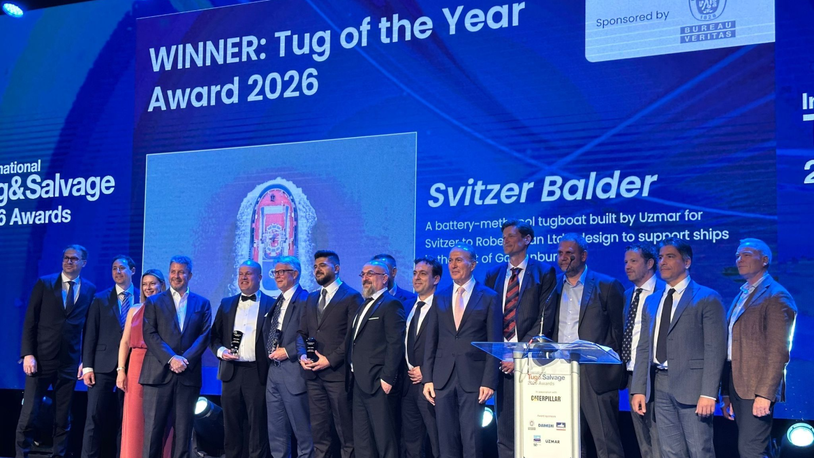
The 28th International Tug & Salvage Convention, Exhibition & Awards will be held in Gothenburg, Sweden, in association with Caterpillar, 19-21 May 2026. Use this link for more details of this industry event and the associated social and networking opportunities.
Related to this Story

Events

Maritime Regulations Webinar Week
 16 Dec 2025
 GMT - ONLINE
Floating energy: successfully unlocking stranded gas using FLNGs and FSRUs
24 Feb 2026GMT - ONLINE
© 2026 Riviera Maritime Media Ltd.


