


Business Sectors
Business Sectors
Events
Contents
Register to read more articles.
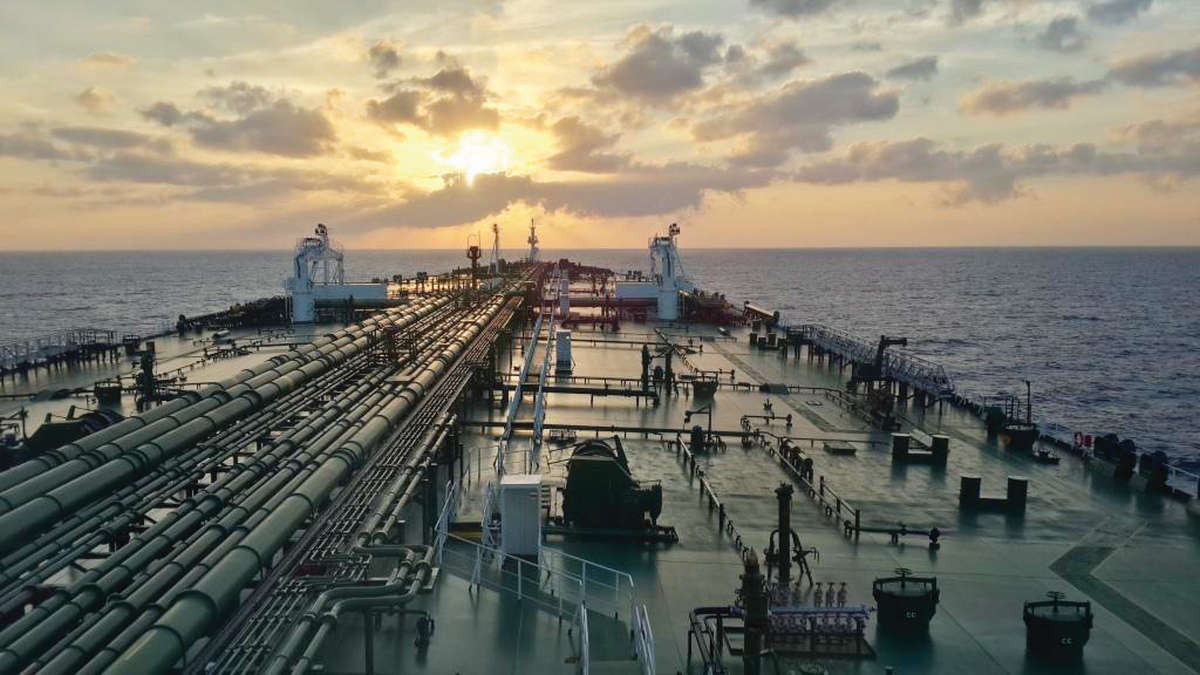
Shadow fleet expands: Russian oil trade the main driver, despite continued sanctions
The so-called "shadow fleet" of vessels trading in sanctioned cargoes is continuing to grow, with the majority of vessels trading Russian oil despite ongoing Western sanctions


As Western governments continue to add vessels, individuals and businesses to economic blacklists, ship-to-ship (STS) transfers remain a key mechanism for sanctions-evading vessels to move Russian crude, with Oman and Egypt emerging as important new hubs for this so-called shadow fleet of tankers.
In the past week alone, the United Kingdom and United States have levied sanctions. The US sanctioned a pair of LNG carriers and the UK government sanctioned another 10 tankers that it accused of being "‘high-volume offenders’ – vessels operating around the clock to transport as much Russian oil as possible".
On 11 September, the UK’s Foreign, Commonwealth and Development Office announced sanctions against the 10 vessels it claimed were part of "Putin’s ’shadow fleet’, used by Russia as a desperate attempt to undermine UK and G7 sanctions."
"The ships targeted are all ‘high-volume offenders’ – vessels operating around the clock to transport as much Russian oil as possible. These ships will now be barred from entering UK ports and will be refused access to the UK Ship Register," a statement quoting UK Foreign Secretary David Lammy said.
The sanctions bring the number of vessels tied to sanctioned Russian oil trading by the UK government to 25.
The latest vessels sanctioned are:
NIKOLAY ZUYEV (IMO 9610781)
NS CLIPPER (IMO 9341081)
NS CORONA (IMO 9341079)
ZALIV ANIVA (IMO 9418494)
OLYMPIYSKY PROSPECT (IMO 9511387)
LEONID LOZA (IMO 9412347)
NS ASIA (IMO 9413561)
SCF BALTICA (IMO 9305568)
VLADIMIR TIKHONOV (IMO 9311622)
SCF VANKOR (IMO 9316127)
According to the UK, existing sanctions have cut into Russian revenues by some US$400Bn or what the UK said would be the equivalent of four years of funding for Russia’s war in Ukraine.
"Russia has been forced to spend over US$8Bn amassing this shadow fleet. But with sanctioned tankers loitering and unable to load oil, we are determined to make Putin’s investment an expensive misstep for the Kremlin. Our action will help to counter Russian attempts to undermine and dodge economic sanctions," Mr Lammy said.
And in a statement last week, announcing sanctions against the 2007-built, 149,700-m3 New Energy and the 79,833-m3 newbuilding Mulan LNG carriers. the US Department of State said it would “continue to answer attempts to operationalise the sanctioned Arctic LNG 2 project or otherwise expand Russia’s energy capabilities with a swift response."
- US adds sanctions targeting Iran-linked networks as attacks in the Red Sea continue
- Latest EU sanctions target Russian LNG exports, name 27 vessels
- Russian sanctions and the dark fleet: a spectre haunting the seas
Growth of the shadow fleet
According to AXSMarine Research, the shadow fleet currently consists of more than 700 tankers, almost half of which are involved in the Russian oil trade.
From September 2023 to August 2024, the total number of ships in this fleet increased by 20%. AXSMarine categorises these vessels into two distinct groups: "ghost" and "dark" vessels.
The "ghost fleet" comprises tankers owned by small shipping companies with no prior experience in ship management, yet actively involved in Russian oil trading. AXSMarine notes that since the crude oil price cap was introduced in December 2022, the ghost fleet’s share of the overall shadow fleet has surged by more than 27%. In 2024 alone, the share of ghost tankers increased by over 15%, with their average age estimated at over 19 years.
The "dark fleet," on the other hand, consists of tankers owned by companies with direct links to Russia, Iran, and Venezuela. These vessels often engage in illicit trading, circumventing international sanctions. The dark fleet’s average age is nearly 17 years. Data from AXSMarine shows a slight decrease in the dark fleet’s share of the total shadow fleet, although this remains within the 20% range. AXSMarine points out that such fluctuations are common.
Emerging STS hubs for Russian crude exports
Despite the UK government claiming that sanctions on the ’shadow-fleet’ "have left vessels materially disrupted, with the vast majority of them idling outside ports and unable to carry on their trade in Russian oil," analysts say the data shows that STS transfers continue to play a crucial role in facilitating the export of Russian-origin crude oil.
Data from S&P Global Commodities at Sea shows that 254,000 barrels per day (b/d) of Russian crude were rerouted via STS transfers last month. Mark Esposito, senior principal research analyst, highlighted that August marked the third consecutive month in which over 200,000 b/d of Russian crude were transferred at sea, a pattern last seen between April and June 2023.
Esposito also reported that STS operations near Oman facilitated a record 92,000 b/d of crude shipments to India, marking a four-month high. Meanwhile, STS transfers near Egypt tripled from 32,000 b/d in July to 92,000 b/d in August—the highest level since April.
Previously, Greece—specifically Laconia Bay—served as a major hub for STS transfers of Russian oil. However, military exercises conducted by the Greek Navy in the second quarter of the year have significantly reduced STS activity in the region.
Greeks are out
Greek vessel operators have also shown a noticeable shift in behavior. While they were highly active in Russian crude exports during the initial months following the invasion of Ukraine, recent data from S&P Global Commodities at Sea suggests that these operators have steadily reduced their involvement in this trade.
Esposito observed that in August, Greek-domiciled operators were responsible for just 7% of Russian crude exports—the lowest level since the invasion. In contrast, 28% of the month’s shipments were carried by vessels that did not disclose a nationality of control. China-based operators currently hold the largest share of Russian crude exports.
Despite international sanctions, the ’shadow fleet’ in Russian oil trade is expanding, affecting global tanker markets and fleet strategies. Discover how these geopolitical factors are influencing the tanker industry at the Tanker Shipping & Trade Conference 2024. Join us to gain insights into market dynamics, fleet management, and the future of global tanker operations.
Learn More

Related to this Story

Events

Maritime Regulations Webinar Week
 16 Dec 2025
 GMT - ONLINE
Floating energy: successfully unlocking stranded gas using FLNGs and FSRUs
24 Feb 2026GMT - ONLINE
© 2026 Riviera Maritime Media Ltd.


