


Business Sectors
Business Sectors
Events
Contents
Register to read more articles.
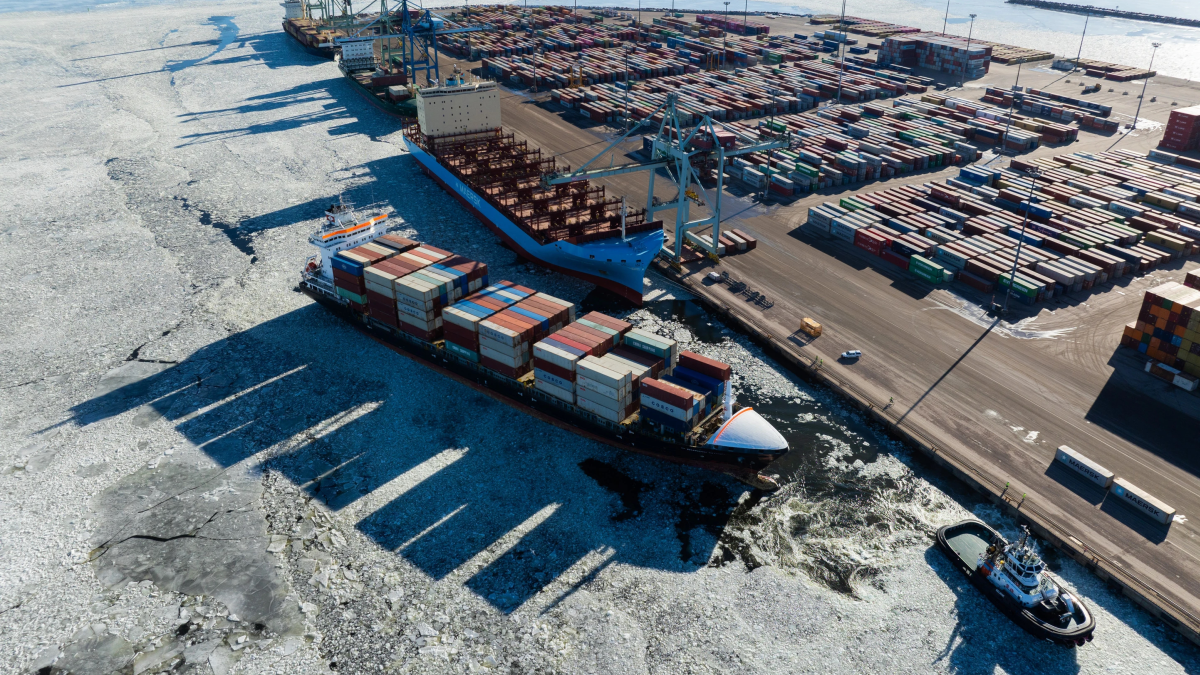
Alfons Håkans: a busy season for harbour icebreaking
Finland’s main owner of ice-class tugs has provided icebreaking in Finnish, Estonian and Latvian ports this year as the Baltic suffered from harsh winter conditions


It has been an exceptionally cold winter in the Baltic region, with ice forming in rivers, lakes, harbours, along coastlines and across the sea lanes.
Icebreaking started in November 2025 and will continue into April or May 2026, with several tugboats keeping shipping channels, quaysides and port facilities clear for cargo and passenger ships.
Alfons Håkans’s fleet has been breaking ice in the Gulf of Bothnia, the Baltic Sea and in Baltic ports, providing an essential service to shipping and ports.
1995-built anchor-handling icebreaker Zeus of Finland, with 5,420 kW of propulsion power and 101 tonnes of bollard pull, and Calypso, 2004-built, 2,320-kW, with 36 tonnes of bollard pull, and a detachable motorised ice-breaking bow, broke ice along government fairways and in open seas under a contract with the Finnish Transport Infrastructure Agency.
“The rest of the fleet of harbour tugs carry out harbour icebreaking in Finnish, Estonian and Latvian ports,” said Alfons Håkans manager for health, safety, security, quality and the environment, Kimmo Lehto.
Alfons Håkans operates 24 azimuth stern drive (ASD) tugs, 11 tugs with single-screw conventional propulsion, three combi tugs and Zeus of Finland.
“Sea icebreaking with Zeus of Finland started in November in northern Finland, but harbour icebreaking started in southern Finland relatively late, in January 2026,” said Capt Lehto.
“When it started, the temperature stayed below -15 degrees Celsius in most of the ports for five weeks, and during that time, harbour icebreaking was needed several times, around the clock, in most of the ports where Alfons Håkans tugs operate.”
Alfons Håkans’ ASD tugs have bollard pulls ranging from 35 tonnes up to 67 tonnes and power from 2,860 kW on 2004-built Uran to 4,060 kW on 2021-built Helios and Selene. Six tugs have a bollard pull of more than 60 tonnes and power of over 3,850 kW.
“Harbour icebreaking was needed several times, around the clock”
Its conventional tugs range from 1967-built Hamlet, the smallest, with 15 tonnes of bollard pull and 882 kW of power, up to 1976-built Kraft with 50 tonnes of bollard pull and 2,590 kW of power.
“Without ice breaking, maritime traffic would suffer. Even vessels with a high ice class need assistance sometimes in open seas or on shipping fairways,” said Capt Lehto.
“In ports, it is essential to have harbour tugs breaking ice next to the berths before the arrival of a cargo or passenger ship.”
All Alfons Håkans’ tugs have ice-class, meaning their hull and propulsion meet the correct class notations and national requirements for strength, while deck machinery, wheelhouses and accommodation are adapted for cold-condition operations. Their hulls are strengthened, their bows shaped to ride up and break ice, and their underwater structures are reinforced to keep critical components safe from pressure and impact.
Most of its tugboat fleet (23) has ice class to 1A, especially those with bollard pulls of more than 35 tonnes, while eight tugs have 1A Super-ice class, two have 1B and one has 1C.
“In ports, it is essential to have harbour tugs breaking ice next to the berths before the arrival of a cargo or passenger ship.”
“Our existing tugs are all well maintained and serviced, as we will need our ASD and conventional tugs for icebreaking duties in the future,” said Capt Lehto.
“When the amount of broken ice (brash ice) becomes very thick due to continuous icebreaking in the harbour basins, our conventional tugs with single and open propellers are the only ones that can effectively break the ice in ports.”
As the brash ice does not escape from the basins, the thickness of the ‘porridge’ can be several metres.
“It is sometimes very challenging to operate tugs with ASD thrusters, because blocks of ice get sucked into the thruster unit that has a nozzle, and then the thruster will stop,” said Capt Lehto.
Alfons Håkans upgrades older tugs with new propulsion control systems, such as 3,730-kW Dunker, with Steerprop supplying the controls during an extensive retrofit in 2025, and Artemis and Apollon have now been upgraded with winter propellers that can be installed by divers without drydocking.
“Divers will dismantle nozzles and summer propellers before the ice-breaking season and install winter propeller blades. When the ice-breaking season is over, the summer units will be installed, again by divers, to replace the winter ones,” Capt Lehto explained to Riviera.
“In many northern ports, their presence is what keeps the maritime economy functioning”
Alfons Håkans is constantly upgrading its fleet with newbuilds or those purchased from other owners as needed in future operations.
In 2023, its fleet was bolstered with the addition of two tugboats purchased from Svitzer: 1991-built Svitzer Björn, renamed Björn, and 1973-built Svitzer Helios, renamed Victoria.
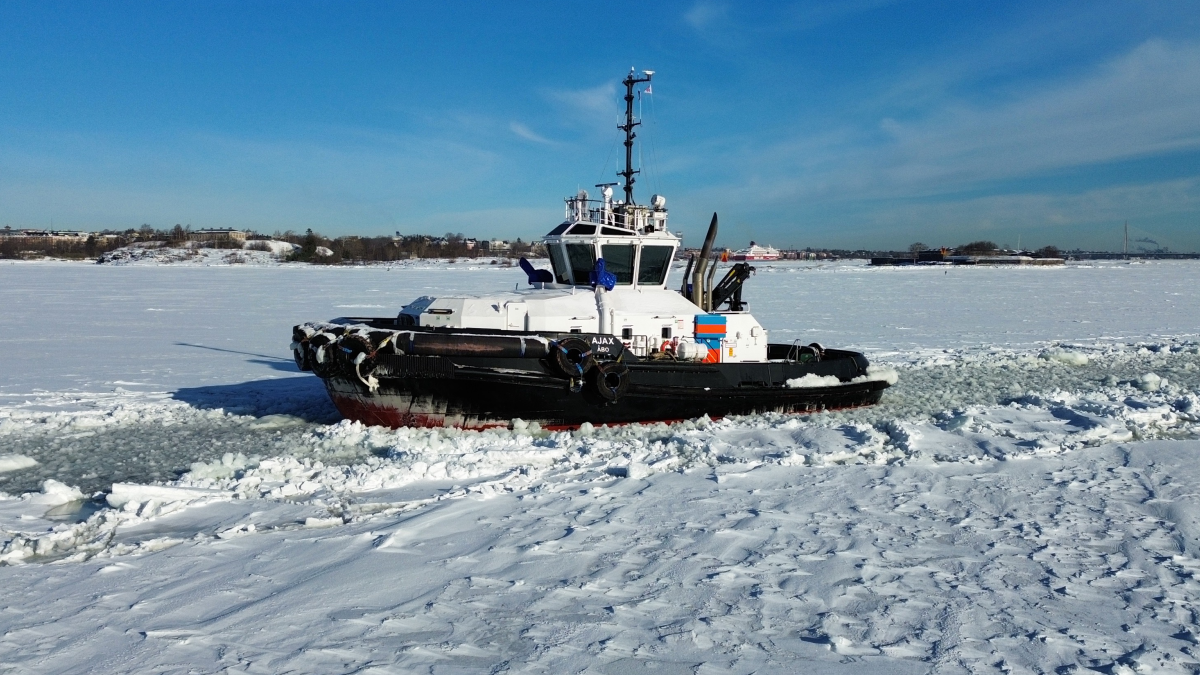
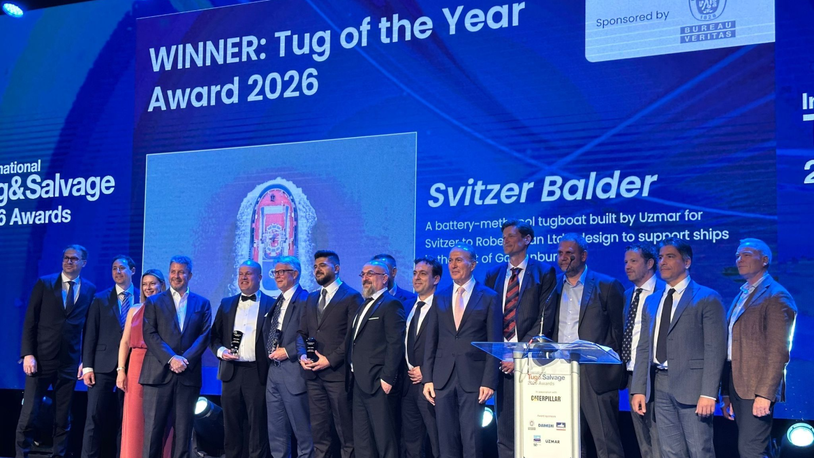
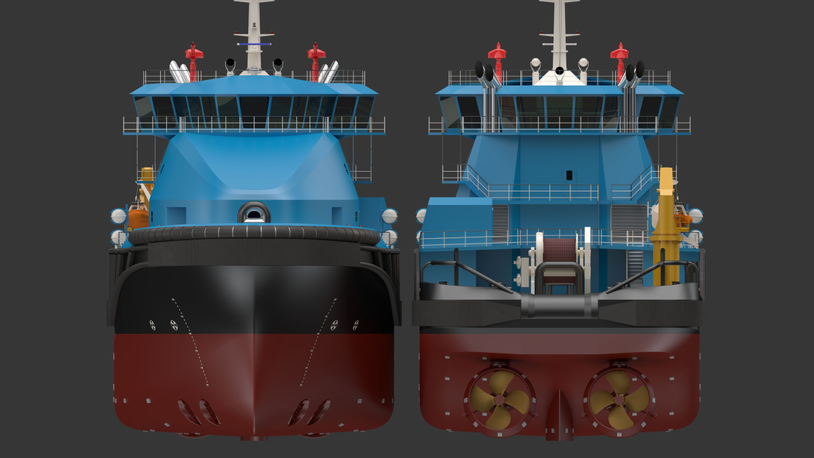
In 2024, Ajax was added to the fleet after its construction by Sanmar Shipyards to Robert Allan Ltd’s TundRA 2600 design and to ice class 1A, with more than 60 tonnes of bollard pull, FiFi1-class firefighting capabilities and propulsion compliant with IMO Tier III emissions requirements.
“Ajax is the newest ice-breaking tug, and it has been an essential asset in the port of Helsinki, where ice breaking has been performed sometimes simultaneously, by three tugs in different parts of the harbour,” said Capt Lehto.
“We are constantly upgrading the fleet of tugs as needed to meet future operations.”
Investment is also focused on recruiting, retaining and training seafarers, who are vital to tugboat operations.
“We do onboard training with experienced masters and simulator training with maritime pilots and have comprehensive induction schemes,” said Capt Lehto.
European Tugowners Association opinion
The importance of ice-breaking tugs to maritime trade in the Baltic was highlighted by European Tugowners Association secretary general Anna Maria Darmanin when she witnessed operations on Alfons Håkans tugs in Finnish ports in March 2026.
“Their work is rarely visible outside the maritime world, but without them, winter would sever supply chains, isolate communities and undermine the resilience of entire regions,” she said.
“The role these tugs play goes far beyond escorting ships. In many northern ports, their presence is what keeps the maritime economy functioning.”
When ice forms, many commercial ships cannot manoeuvre safely without assistance from an ice-breaking tug, which is built to operate year-round without being damaged by ice floes.
“Ice‑breaking towage ensures that people, fuel, food, raw materials and manufactured goods continue to move, preserving the economic rhythm that sustains northern industries,” said Ms Darmanin.
These tugs break ice by riding up and using their weight to fracture the surface and then propelling through the fracture to open it wide enough for the following vessel. “In this tug, you certainly feel the breaking of the ice as the vessel itself is slowed down by the resistance of the ice and also sways sideways once the thick ice is crushed,” she continued.
“These tugs are an essential requirement for maintaining access to ports through long and severe winters. Towage in ice conditions is not merely a commercial service but an essential link in the chain of winter resilience.”
Riviera’s 28th International Tug & Salvage Convention, Exhibition & Awards will be held in Gothenburg, Sweden, in association with Caterpillar, 19-21 May 2026. Use this link for more details of this industry event and the associated social and networking opportunities.
Related to this Story

Events

Maritime Regulations Webinar Week
 16 Dec 2025
 GMT - ONLINE
Floating energy: successfully unlocking stranded gas using FLNGs and FSRUs
24 Feb 2026GMT - ONLINE
© 2026 Riviera Maritime Media Ltd.


