


Business Sectors
Business Sectors
Events
Contents
Register to read more articles.
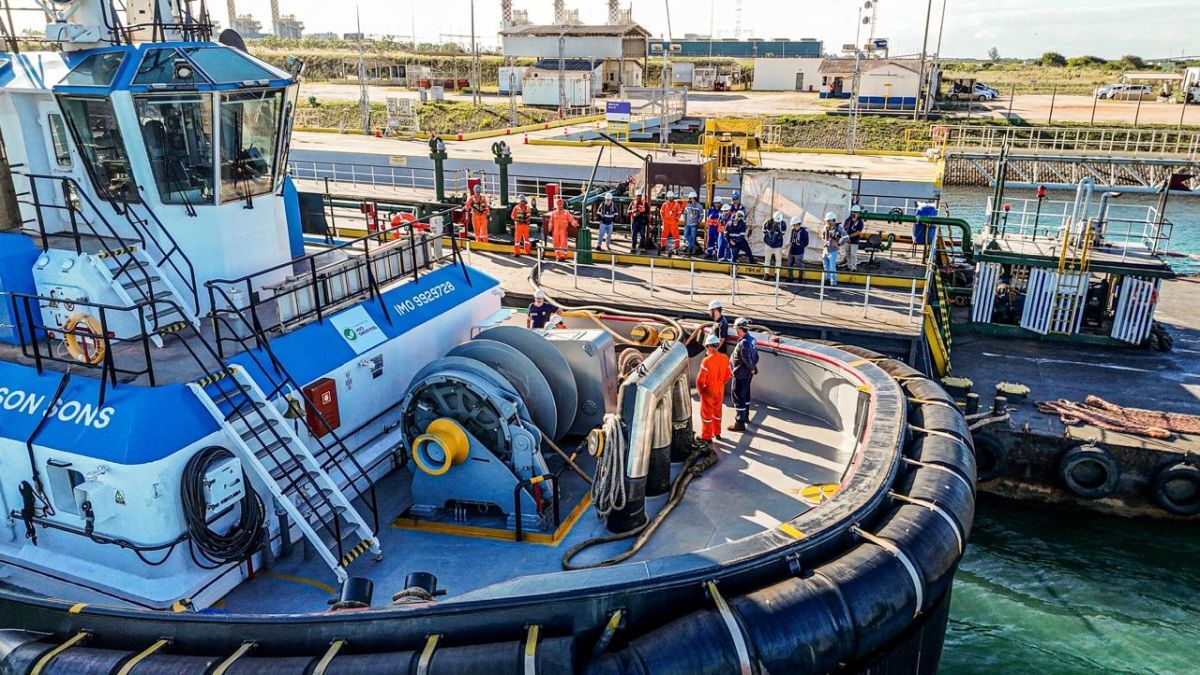
Biofuel trial planned for Brazilian port tugs
Wilson Sons is trialling hydrotreated vegetable oil (HVO) on its tugboats after Brazil’s Agency of Petroleum, Natural Gas and Biofuels approved testing this fuel in the Port of Acu, near Rio de Janeiro


The Brazilian vessel owner has been using HVO supplied by Efen on tugs assisting tankers at the Acu Liquid Bulk Terminal (TLA), owned by Vast Infraestrutura, since the end of March. HVO was imported by Efen as a substitute to marine diesel oil.
“HVO is a fuel that is 100% compatible with the engines in our fleet, and we believe its use is a significant step in our emissions-reduction journey,” says Wilson Sons executive director, Marcio Castro. “Only with partners aligned towards a more sustainable operation will we achieve our decarbonisation goals. With Porto do Açu, Vast and Efen, we can be sure we are on the right path.”
Imported HVO can reduce emissions by more than 80%, considering the complete lifecycle of its production and input. This could reduce further in the future if HVO is produced in Brazil.
“This is a major milestone for Efen and all other companies involved and is a relevant step towards decarbonisation in the Brazilian maritime and port sector,” says Efen chief executive Rafael Pinheiro. “We expect to expand the supply to other vessels of different sizes in the Port of Acu shortly.”
Vast provided the necessary infrastructure for handling biofuels at TLA, which Vast commercial director, Eduardo Goulart, says will be expanded with more storage tanks. “We should add biocomponents to marine fuels and capture bulk liquids that are not currently planned for the terminal,” he adds. “We plan that in the coming years, Vast will have a hub operating a wide range of bulk liquids, such as clear fuels, lubricants, ethanol, and chemicals.”
Port of Acu chief executive, Eugenio Figueredo, says the port is “working with global companies to set up plants to produce non-fossil fuels based on green hydrogen and ammonia, in addition to HVO.”



Related to this Story


Events

Maritime Regulations Webinar Week
 16 Dec 2025
 GMT - ONLINE
Floating energy: successfully unlocking stranded gas using FLNGs and FSRUs
24 Feb 2026GMT - ONLINE
© 2026 Riviera Maritime Media Ltd.


