


Business Sectors
Business Sectors
Events
Contents

Iranian military declares Strait of Hormuz closed, vows to set ships trying to pass 'ablaze'
Iranian state media outlets have reported an IRGC statement that the Strait of Hormuz "has been closed", with threats of attack to any vessel attempting to sail through it


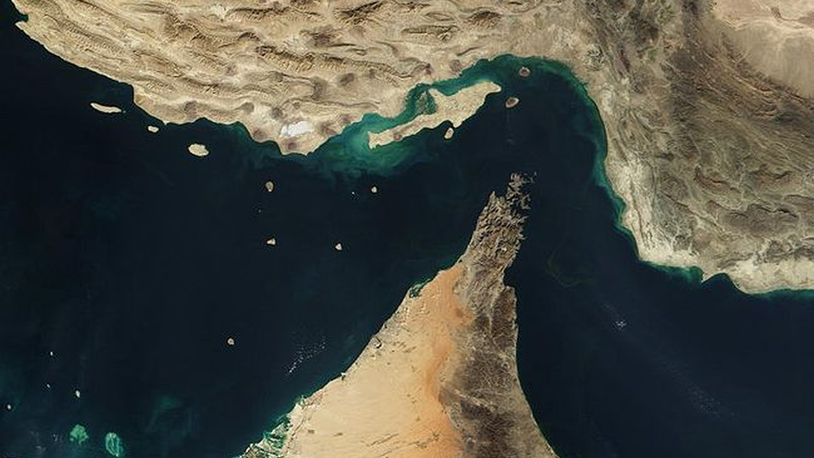
Iran’s Islamic Revolutionary Guard Corps (IRGC) has declared the closure of the Strait of Hormuz, the narrow, oxbowed shipping passage that lies between Iran and the United Arab Emirates (UAE) and connects the Persian Gulf with the Gulf of Oman and the Arabian Sea.
Broadcast on Iran’s national state television Islamic Republic of Iran Broadcasting, and reported on by state media outlets, senior IRGC official Ebrahim Jabari said, "The strait is closed. If anyone tries to pass, the heroes of the Revolutionary Guard and the regular navy will set those ships ablaze."
Rumours of Iran acting to close the Strait of Hormuz, which carries an estimated 20% of global energy flows, have been rife since the US and Israel began a bombing campaign in Iran. And despite the IRGC statement, there remains no formal announcement to come directly from Iran’s central government.
Iranian state-controlled outlet Tasnim News Agency wrote in an article dated 28 February that the "Hormuz Strait [is] closed to all vessels" and that "No vessel is allowed to cross the Strait of Hormuz following the attacks launched by the US and Israel".
"Vessels in the area are receiving repeated messages from the IRGC telling them that no ship is allowed to cross the strategic strait. It comes as the Iranian Armed Forces continue retaliatory strikes against US and Israeli targets," Tasnim’s story said.
Maritime security specialists Dryad Global wrote in a security update that "such VHF indications do not constitute a legal suspension of transit passage under UNCLOS."
Operationally, the threat of attack is likely more pertinent than any official or unofficial closure of the strait, and the Joint Maritime Information Center (JMIC) in Bahrain has raised the regional maritime risk levels to its highest level, critical. JMIC’s 24-48-hour outlook said all merchant vessels, regardless of flag or nationality are at risk from attack.
Further attacks on energy infrastructure
Mr Jabari, described as a commander and senior adviser to IRGC commander-in-chief Ahmad Vahidi by Al-Jazeera, also threatened further Iranian attacks on energy facilities in the Middle East region.
“We will also attack oil pipelines and will not allow a single drop of oil to leave the region. The oil price will reach US$200 in the coming days,” Al-Jazeera quoted Mr Jabbari as writing in a post on a Telegram social media channel linked to the IRGC.
Governments and agencies across the Middle East have reported missile and drone attacks from Iran on energy and port infrastructure, causing damage, injury, disruption and closures, according to local reports.
Infrastructure has been struck in Bahrain, Oman, Qatar, Saudi Arabia and the UAE.
QatarEnergy has temporarily halted LNG production after its facilities in Ras Laffan and Mesaieed were targeted by drones, immediately impacting gas prices worldwide.
Saudi Arabia’s Defence Ministry said state-run energy group Aramco had temporarily closed operations at the Ras Tanura refinery after a double drone attack on the facility.
The Saudi statement said air defences had intercepted the drones, but that debris caused fires which were quickly brought under control. Video of the facility on fire, verified by international media, showed thick plumes of smoke rising from the refinery, which remains closed to assess damage and carry out repairs, according to Aramco.
US response
The attacks have caused energy prices to spike, and US Secretary of State Marco Rubio told a press briefing on 2 March that the US government was making efforts to mitigate price rises and prevent Iran’s naval forces from shutting off energy from the Persian Gulf.
"Obviously, markets are going to be reacting to news about what’s happening. And again, a reminder – think about it, okay? This terroristic regime, led by radical clerics, can potentially shut off 20% of global energy. That’s the kind of leverage they have because of their navy. We’re going to destroy their navy," Secretary Rubio said.
Overnight between 2 and 3 March, reports have surfaced of US strikes on a key Iranian naval base that have reportedly caused fires at the facility and on board at least one naval vessel stationed there.
And the US Central Command posted on X that US forces had, as of the early hours of 3 March "destroyed Islamic Revolutionary Guard Corps command and control facilities, Iranian air defense capabilites, missile and drone launch sites and military airfields".
- Iranian military declares Strait of Hormuz closed, vows to set ships trying to pass ’ablaze’
- ‘Huge impact’: Harry Vafias on tanker rates booming amid oil and gas supply shock
- Hormuz closure scenario predicts LNG price pushing past US$100/MWh
- ’Big game-changer’ Iran conflict sends tanker rates skyrocketing, signals short‑term bullish market
- Stena tanker hit as Middle East ports rocked by Iranian missile attacks; Qataris and Saudis close gas and oil plants
- Crew casualties grow as commercial vessels take fire in escalating US-Israeli and Iranian conflict
- ’Over 200 tankers stuck inside the Persian Gulf,’ as war risk drops out and insurance rates double
Sign up for Riviera’s series of technical and operational webinars and conferences:
- Register to attend by visiting our events page.
- Watch recordings from all of our webinars in the webinar library.



Related to this Story

Events

Maritime Regulations Webinar Week
 16 Dec 2025
 GMT - ONLINE
Floating energy: successfully unlocking stranded gas using FLNGs and FSRUs
24 Feb 2026GMT - ONLINE
© 2026 Riviera Maritime Media Ltd.


