


Business Sectors
Business Sectors
Events
Contents
Register to read more articles.
Methanol fuel: challenges and solutions for newbuilds and retrofits
There has been a barrage of newbuild orders at shipyards for ships operating on methanol fuel, but there are still class and regulatory challenges to address before owners prepare to retrofit existing vessels


Key technical challenges include installing cofferdams for storage tanks and dual-fuel or methanol-only engines, fuel systems and bunkering stations.
The shortage of green methanol supply, bunkering infrastructure, global regulations and rules also need to be solved.
An expert panel tackled these during Riviera Maritime Media’s Pathway to 2030 and beyond: Methanol as a marine fuel webinar, held 8 May during Riveria’s
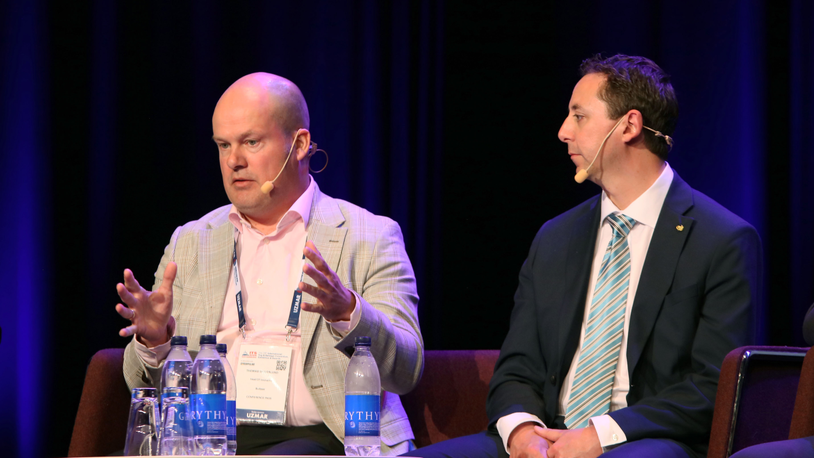
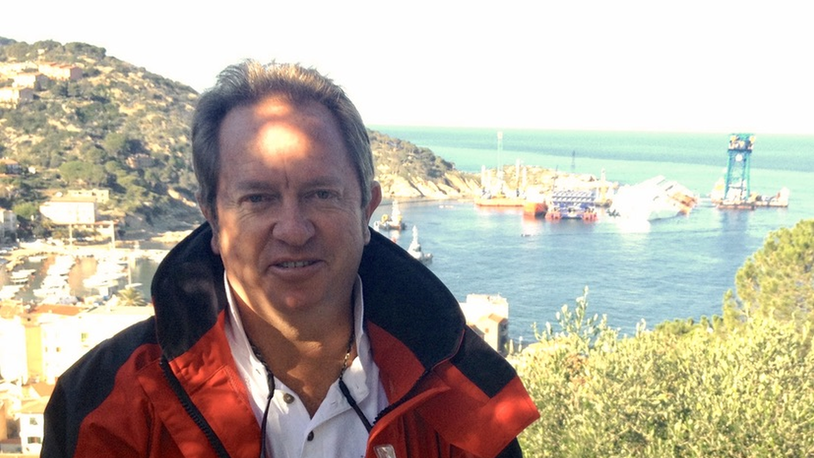
Methanol Institute senior advisor Kjeld Aabo, Fugro project manager for fleet development Mike Driehuys and SRC Group chief executive Hannes Lilp.
They discussed the importance of having the right rules, class notations and regulations to accelerate the adoption of methanol fuel in all sectors of the maritime industry. They considered the supply and infrastructure considerations, propulsion technology developments, and challenges with fuel storage, handling and supply systems and retrofitting vessels.
Mr Aabo said there has been an acceleration in methanol-fuelled merchant ships being ordered, including tankers, container ships, bulk carriers and general cargo ships.
257 vessels have been completed or are on order at shipyards worldwide “and more orders are coming” all ready to run on methanol fuel.
Plans are being made to build green methanol production plants from renewable sources, mainly in North America, China and Europe. “Mapping of the bio- and e-methanol projects is important to see what is coming,” said Mr Aabo.
Methanol Institute forecasts there will be more than 28M tonnes of annual production, if low-carbon fuels are included, in 2028, up from just 0.9M tonnes in 2024.
“The engine technology is there and there is growing storage and bunkering infrastructure,” said Mr Aabo. “There are no excuses for not choosing methanol due to the technology.”
Major shipowners and operators, including AP Moller-Maersk, CMA CGM, Seaspan and COSCO have selected methanol fuel for newbuilds and green corridors between leading ports have been set up.
“There are 44 different corridors around the world,” said Mr Aabo. “Methanol will have a huge impact on future fuels.”
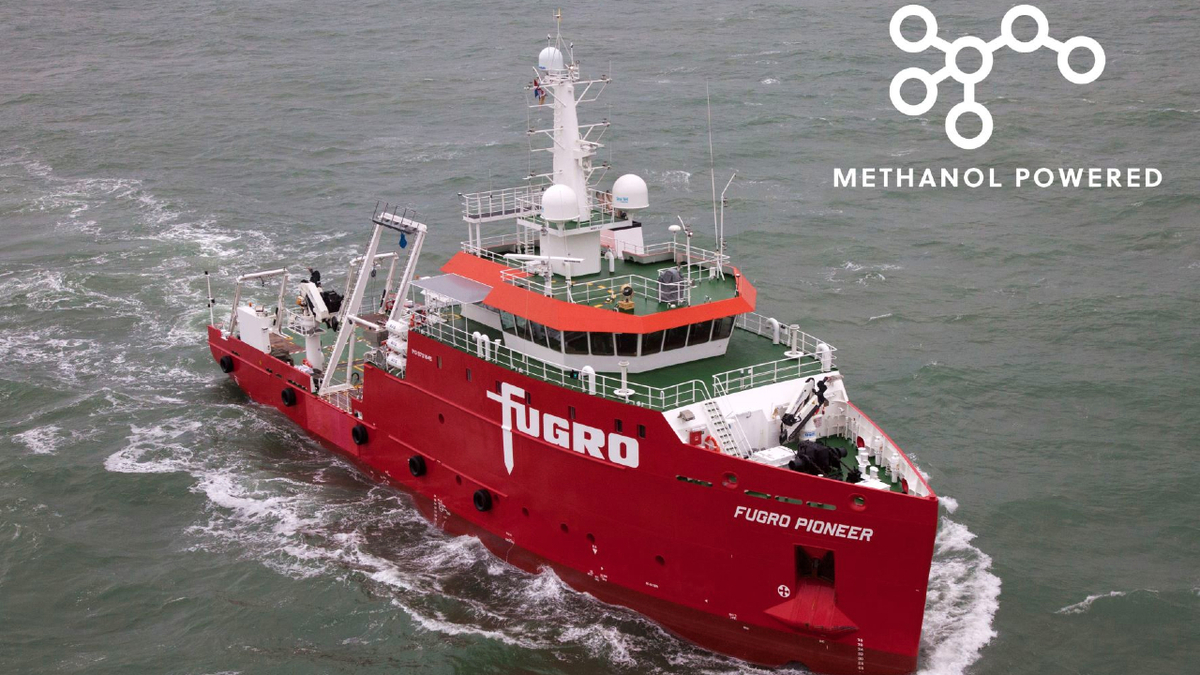
Mr Driehuys described how Fugro overcame challenges when retrofitting an offshore geophysical survey vessel to use methanol fuel, including space constraints, technical issues and safety risks.
This project, converting Fugro Pioneer to being powered by methanol or diesel, is part of Fugro’s sustainability strategy to decarbonise operations. “By 2035, we want to be zero emissions,” said Mr Driehuys. This covers the Dutch group’s fleet of operated and owned geotechnical and geophysical research vessels, including those chartered in from third parties.
“We have two ways to do this, by replacing the existing fleet of geophysical vessels with unmanned survey vessels - we have eight of these vessels with emissions of just 5% compared to manned vessels.”
The other method is converting existing vessels or building new ships using low carbon or net-zero emissions fuels.
Fugro Pioneer was converted with two of its Caterpillar diesel-burning engines replaced with methanol-only Scania engines with ignition enhancements in a pilot project to test what is possible.
“The main objective was to gain experience and learn lessons from a methanol retrofit,” said Mr Driehuys. There were several technical challenges and those with working within existing rules and regulations developed for ships with low flashpoint fuels.
“The hardest part of the whole project was to put cofferdams into existing tank structures,” he explained, adding there were time and structural constraints. “We managed to put [the cofferdam] in, but we lost a lot of space,” said Mr Driehuys. “The vessel was not laid out for additional equipment, such as double-walled piping. Fugro Pioneer was chosen as it had overcapacity for bunker and other tanks, but it will still be limited in its operational profile.”
He said retrofit projects include tank adjustment and arrangement, engine replacement or retrofit, adding a bunkering station and venting and replacing fuel and auxiliary systems.
Newbuild projects would be easier as naval architects can design a vessel to include smart locations for the fuel tanks, but owners still “need to review the operational profile” to adjust for lower volumes of stored fuel and shorter periods between bunkering.
Mr Lilp offered a solution for retrofitting merchant ships without using cofferdams and the resulting reduced cargo space. The purpose of cofferdams is “to protect the tank from outside fire, and protect surroundings from leakages,” he said.
SRC’s solution is a sandwich plate system (SPS), a structure with a 25-mm core thickness acting as a barrier. This has already been proven from its use onshore to stop leakages, thus becoming a triple barrier.
Mr Lilp said there would be an 85% tank volume increase compared with using cofferdams, with “less impact on general arrangement and cargo capacity and much less bunkering and more competitive contract negotiations.”
There is also no need for maintenance with an SPS, which there would be for cofferdams. SRC has approval in principle from class society Lloyd’s Register for this SPS.
Webinar poll results
Attendees were asked to vote on a series of poll questions during the webinar. Here is a summary of the results.
What is the most critical challenge in ensuring a supportive public policy framework for methanol fuel blending?
Establishing consistent blend-in mandates: 9%
Providing financial incentives for methanol adoption: 23%
Harmonising regulations across regions: 34%
Addressing potential land-use conflicts for biomethanol production: 19%
Educating policymakers on the benefits of methanol as a fuel: 15%
Which factor do you believe will have the greatest impact on the adoption of methanol as a marine fuel in the coming decade?
IMO GHG reduction targets: 11%
Regional regulations (such as FuelEU Maritime): 16%
Availability of methanol-compatible engines: 14%
Development of renewable methanol production: 46%
Collaboration among industry stakeholders: 13%
What do you consider the most significant advantage of methanol as a marine fuel compared with other alternative fuels?
Lower carbon intensity: 12%
Compatibility with existing infrastructure: 29%
Scalability of production: 6%
Competitive pricing: 9%
Ease of handling and storage: 44%
Which factor do you believe will have the greatest impact on the success of methanol conversion projects like Fugro Pioneer?
Collaboration among industry stakeholders (shipowners, yards, fuel suppliers): 19%
Development of methanol-specific safety standards and regulations: 16%
Availability of methanol bunkering infrastructure: 14%
Technological advancements in methanol engines and fuel systems: 4%
Economic viability and cost-effective methanol conversions: 47%
What do you consider the most significant challenge in converting existing vessels to run on methanol fuel?
Ensuring adequate bunker capacity: 32%
Designing safe and effective methanol storage and handling systems: 31%
Adapting engineroom layout and ventilation: 16%
Training crew on methanol-specific safety procedures: 5%
Obtaining regulatory approval and support from authorities: 16%
Which factor do you believe will have the greatest impact on the adoption of novel methanol storage solutions in the maritime industry?
Regulatory approval and acceptance by flag administrations: 15%
Demonstrated safety and reliability through real-world applications: 21%
Collaboration and support from classification societies and industry stakeholders: 11%
Potential for significant improvements in ship performance and operational efficiency: 18%
Compatibility with existing ship designs and retrofit processes: 35%
(source: Riviera Maritime Media)

On the panel of Riviera’s Pathway to 2030 and beyond: Methanol as a marine fuel webinar were: Fugro project manager for fleet development Mike Driehuys, Methanol Institute senior advisor Kjeld Aabo and SRC Group chief executive Hannes Lilp.
Related to this Story
Events

Maritime Regulations Webinar Week
 16 Dec 2025
 GMT - ONLINE
Floating energy: successfully unlocking stranded gas using FLNGs and FSRUs
24 Feb 2026GMT - ONLINE
© 2026 Riviera Maritime Media Ltd.


