


Business Sectors
Business Sectors
Events
Contents
MSC Cruises tests biofuel from agri-food waste with promising results
Trials on MSC Opera demonstrate 100% hydrogenated vegetable oil can be used in marine engines without modification, delivering significant GHG emissions reductions and supporting FuelEU Maritime compliance


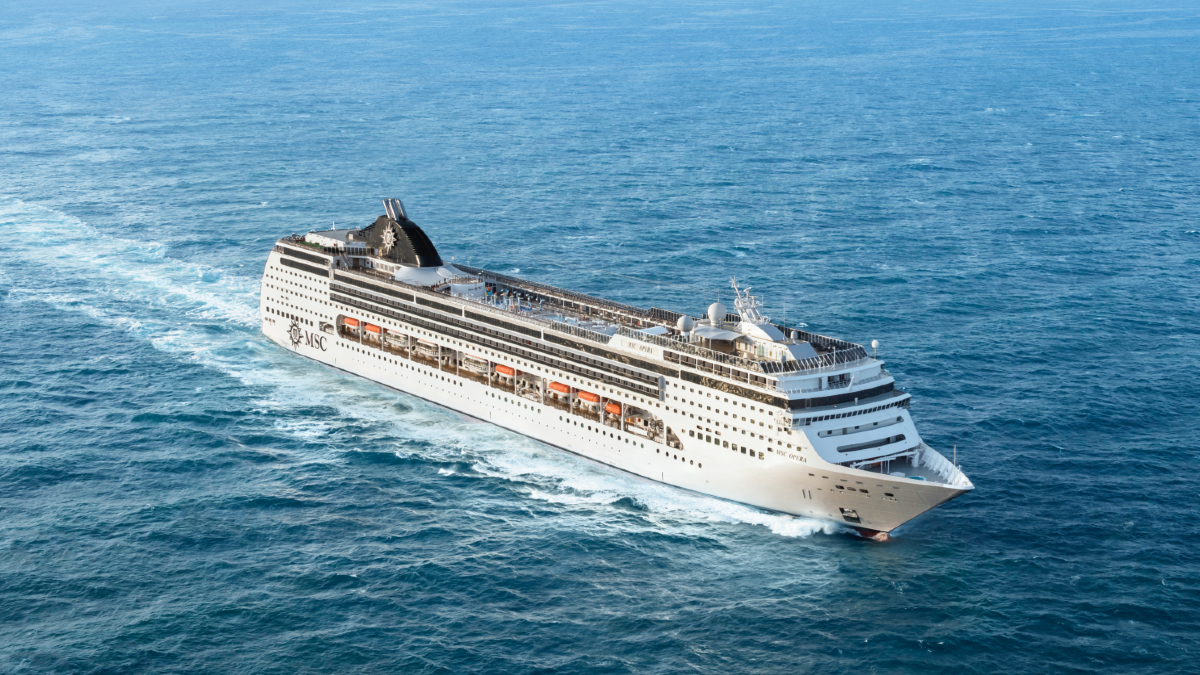
Tests carried out in one of the diesel generators of an MSC Cruise ship have confirmed the technical feasibility of using 100% biofuel to cut greenhouse gas (GHG) emissions and support regulatory compliance targets.
The results of the trials conducted on the 2004-built MSC Opera were reported by fuel supplier Eni and shipowner MSC Cruises.
The biofuel tested was Enilive’s hydrogenated vegetable oil (HVO) made mainly from waste feedstocks such as used cooking oils, animal fats, and residues from the agri-food industry, and refined at production plants in Venice and Gela, Italy.
100% HVO was used in one of the 21-year-old cruise ship’s Wärtsilä 12V38 generator engines, which are part of the vessel’s diesel-electric propulsion plant. The ship’s four medium-speed four-stroke Wärtsilä 12V38 generator engines traditionally burn heavy fuel oil or marine diesel oil, producing a total of about 31.7 MW of output at 600 rpm.
Enilive’s HVO diesel was tested to assess its value as an energy carrier for maritime decarbonisation and its ability to reduce life-cycle GHG emissions.
Using HVO allows shipowners to significantly reduce emissions-related costs and meet the targets set by the FuelEU Maritime regulation.
During the tests, one of the Wärtsilä engines operated on 100% HVO for approximately 2,000 hours without any engine modifications, with performance and emissions data recorded. The tests showed HVO is an immediately applicable solution for marine engines without the need for technological upgrades, while ensuring performance in line with traditional marine fossil fuels. Testing revealed a 16% reduction in NOx emissions, lower particulate matter, and an approximate 80% reduction in GHG emissions compared with fossil fuels.
Technical data on engine performance and associated emissions were collected and assessed by Wärtsilä and class society Bureau Veritas, which acted as an independent certifier to validate the experimental results.
Enilive CEO, Stefano Ballista, said: “The trial with MSC has demonstrated how HVO diesel biofuel can contribute immediately to the decarbonisation of maritime transport. It can be used in its pure form in marine engines validated for its use, allowing a reduction in climate-altering emissions – calculated along the entire supply chain – of between 65% and 90% compared to traditional marine fossil fuels.”
Mr Ballista noted that ships calling at the ports of Genoa, Ravenna, and Venice can be fuelled by a bunker barge with Enilive’s marine HVO diesel.
MSC Cruises CTO, Michele Francioni, said the test results confirmed the technical feasibility of using 100% HVO on its cruise ship to support the company’s continuous decarbonisation efforts. “We believe HVO may play an important role in the decarbonisation of shipping and together with other immediately available fuels such as LNG and bio-LNG, constitutes an immediate opportunity that could be deployed on board cruise ships to accelerate the transition towards renewable fuels, bringing us a step closer to our ultimate goal of reaching net zero GHG emissions by 2050”, he said.

Related to this Story
Events

Maritime Regulations Webinar Week
 16 Dec 2025
 GMT - ONLINE
Floating energy: successfully unlocking stranded gas using FLNGs and FSRUs
24 Feb 2026GMT - ONLINE
© 2026 Riviera Maritime Media Ltd.


