


Business Sectors
Business Sectors
Events
Contents


Oil demand decline in second quarter forecast to be largest since Covid-19
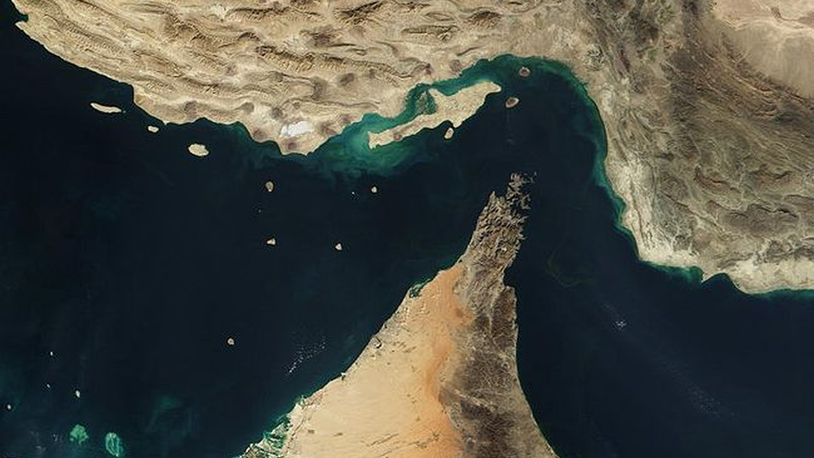
With the US and Iran imposing duelling blockades on shipping through the Strait of Hormuz and energy infrastructure damaged by war, the International Energy Agency (IEA) underscores the significance of the ’largest disruption in history’ to energy markets


A forecast drop in oil demand of 1.5M barrels per day (b/d) in Q2 2026 would be the largest drop seen since the Covid-19 pandemic halted most global passenger transport for several months in 2020.
The projected drop in demand would represent, at an annualised level, one-sixth of the roughly 9.0M b/d annual average demand lost during the pandemic year of 2020.
In its latest Oil Market Report for April 2026, the IEA said that, while the deepest cuts in oil use have come in the Middle East and Asia Pacific, mainly for naphtha, LPG and jet fuel, the continued disruption to energy flows coming out of the Middle East would cause further demand destruction.
"Demand destruction will spread as scarcity and higher prices persist," the report said, noting that global oil supply "plummeted by 10.1M b/d to 97.0M b/d in March, with continued attacks on energy infrastructure in the Middle East and ongoing restrictions to tanker movements through the Strait of Hormuz leading to the largest disruption in history."
The IEA, alongside the International Monetary Fund and World Bank, published a joint statement following a meeting of the three organisations’ leaders as they work in conjunction to respond to the energy crisis caused by the US-Israeli war in Iran and Iran’s closure of the Strait of Hormuz and attacks on energy infrastructure.
"The situation remains very uncertain, and shipping through the Strait of Hormuz is yet to normalise. Even after a resumption of regular shipping flows through the Strait, it will take time for global supplies of key commodities to move back towards their preconflict levels," the joint statement said.
The global agencies cited supply disruptions and shortages of ’key inputs’ as likely to impact energy, food, and other industries, noting the war’s existing forcible displacement of people, jobs, and reduced travel and tourism, "which may take time to reverse".
"The shock has led to higher oil, gas and fertiliser prices, triggering concerns about food security and job losses. Some oil and gas producers in the Middle East have also seen a dramatic loss of export revenue," the statement said.
After a first round of negotiations between the US and Iran failed to find a resolution to end the war, US President Donald Trump announced a ’blockade’ of the Strait of Hormuz to counter the existing closure of the Strait by Iran’s Islamic Revolutionary Guard Corps.
Global seaborne crude shipments down 16% since start of Iran war
Shipping’s charterer and shipowner body BIMCO is estimating the loss of crude oil shipments at 16% due to the war in Iran.
According to BIMCO, before the Iran war, the US Energy Information Administration had estimated global 2026 oil production to be 79.9M b/d. A decrease in seaborne crude trade of 16% represents is equal to 7.6M b/d, the organisation said, and this reduction shipments means that around 10% of the total previously expected crude oil production is currently not reaching markets.
"Since the beginning of the war, tanker transits have reduced to a trickle while other countries have not significantly ramped up exports," BIMCO chief shipping analyst Niels Rasmussen said.
“Seaborne crude oil shipments from the Persian Gulf have fallen 12.7M b/d during the past six weeks compared with the first nine weeks of 2026," he said.
Crude oil shipments from the region have fallen 9.0M b/d against early 2026 trends when accounting for a slight increase in production by other regions.
In total, BIMCO calculated that other countries have increased shipments by 1.4M b/d during the past six weeks compared to the first nine weeks of the year. Venezuela has increased shipments by 0.4M b/d, while Russian Black Sea shipments are up 0.8M b/d. Combined, those increases account for 85% of the increased seaborne shipments from countries outside of the Persian Gulf. India has been the main destination of the increased shipments from both areas, according to the organisation.
"Since the two-week ceasefire was agreed between the US and Iran, transits through the Strait of Hormuz have failed to pick up significantly. The US decision to block all traffic to and from Iranian ports, except humanitarian shipments, could lead to a further reduction in transits," BIMCO noted.
- ’Access restrictions’ emerge across Iran’s ports as analysts assess warship impact on traffic patterns
- US military clarifies Trump Hormuz blockade statements; analyst predicts ’tit-for-tat’ vessel seizures
- US Navy to use underwater drones to clear mines in Strait of Hormuz
- Trump claims immediate US blockade of Strait of Hormuz in social media post
- Middle East disruptions trigger ’structural shock’ in LNG market
Riviera’s International Chemical and Product Tanker Conference will be held in London on 21-22 April 2026. Use this link for more information and to register for the event.




Related to this Story

Events

Maritime Regulations Webinar Week
 16 Dec 2025
 GMT - ONLINE
Floating energy: successfully unlocking stranded gas using FLNGs and FSRUs
24 Feb 2026GMT - ONLINE
© 2026 Riviera Maritime Media Ltd.


