


Business Sectors
Business Sectors
Events
Contents
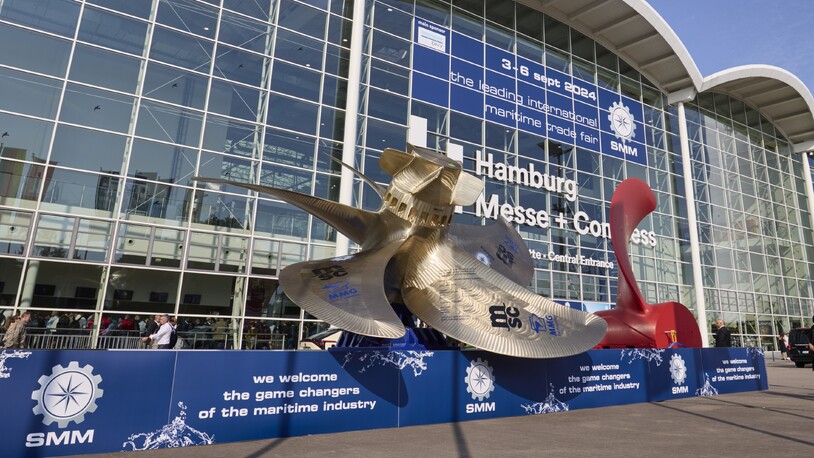

Shipowner, bunker industry groups propose 'simplified' standard for GHG in marine fuels
A proposal submitted to the International Maritime Organisation (IMO) by the International Chamber of Shipping (ICS) and International Bunker Industry Association (IBIA) calls for the use of ’private arrangements between shipping companies’ to enable compliance with IMO’s ship fuel greenhouse gas (GHG) intensity targets


The shipping and bunkering lobby groups say that their proposal for a "streamlined, voluntary ’energy-pooling compliance mechanism’" in IMO regulations covering ship fuels’ GHG intensity will offer a workaround for the shipping and bunkering industries in the event that fuel producers are not able to supply the zero or near-zero carbon fuels required by IMO’s decarbonisation targets.
"The objective is to progressively reduce the GHG intensity of marine fuels and create a market for the production of zero and near-zero GHG fuels, to help ensure achievement of [IMO’s] net zero GHG emissions target by 2050," a statement from ICS and IBIA said.
As part of the proposal, ICS and IBIA have drafted amendments to Annex VI of IMO’s convention on pollution from the maritime industry (MARPOL), that includes a "maximum permitted GHG intensity of marine fuels" metric for use in 2030, to be followed by "an aggressive tightening of this standard in 2040".
According to the proposal, "the initial GHG intensity standard set for 2030 will support shipping to meet the new IMO target that between 5% and 10% of the energy used by shipping must be generated by 2030 from zero or near-zero energy sources," with governments to decide the precise figures.
If sufficient quantities of the no-carbon and low-carbon fuels are not available for vessels, ICS’ and IBIA’s proposal would leave it to companies, rather than governments, to calculate a broader GHG intensity spread through the pooling mechanism. This would, the two organisations said, offer simplicity and uninterrupted trade.
“The International Chamber of Shipping recognises the importance of meeting our decarbonisation targets, not only for shipping but for the world. Our joint proposal provides flexibility to enable compliance by ships should fuels of the required GHG intensity not always be available. This simplified approach avoids the need for an overly complex system, as proposed by the European Union, whereby “compliance units” or “remedial units” would need to be registered with or purchased from a central IMO registry,” ICS Deputy Secretary General Simon Bennett said
“The proposed method of pooled compliance would be a private arrangement between shipping companies and would avoid unnecessary administrative burden for governments, including developing countries’ administrations whose support will be vital to move forward at IMO.”
Edmund Hughes, IBIA’s IMO representative said “The bunker industry fully supports an internationally agreed GHG fuel standard for 2030 which will help to create a global market for marine fuels with a reduced GHG intensity, including sustainable biofuels largely supplied as blends which many existing ships are expected to use to enable them to comply."
Sign up for Riviera’s series of technical and operational webinars and conferences in 2023:
- Register to attend by visiting our events page.
- Watch recordings from all of our webinars in the webinar library.

Events

Maritime Regulations Webinar Week
 16 Dec 2025
 GMT - ONLINE
Floating energy: successfully unlocking stranded gas using FLNGs and FSRUs
24 Feb 2026GMT - ONLINE
© 2026 Riviera Maritime Media Ltd.


