


Business Sectors
Business Sectors
Events
Contents


A stranded fleet reopens shipping’s biofouling debate
As vessels sit idle in Gulf anchorages and IMO drafts a binding biofouling convention, there is an emergent view that the industry has confused cleaning a hull with keeping one clean. And the distinction may not be rewarded under the coming rules


Weeks at anchor in warm Gulf waters have achieved what years of IMO guidance have not. They have forced shipowners to confront biofouling before it forms, rather than after. This enforced idleness in and around the Strait of Hormuz has exposed a costly assumption: that hull fouling should be cleaned off, not prevented. The argument is self-interested. But it is not without merit.
What idleness exposes
Conventional antifouling coatings are designed to work when a ship is moving. The flow of water across the hull keeps the surface active. When a vessel slows below the coating’s rated speed, or stops entirely, that defence weakens. In warm water, the consequences are rapid. The microbial slime layer that precedes barnacles and mussels can form within hours of immersion. Regulators and coating chemists agree on this point.
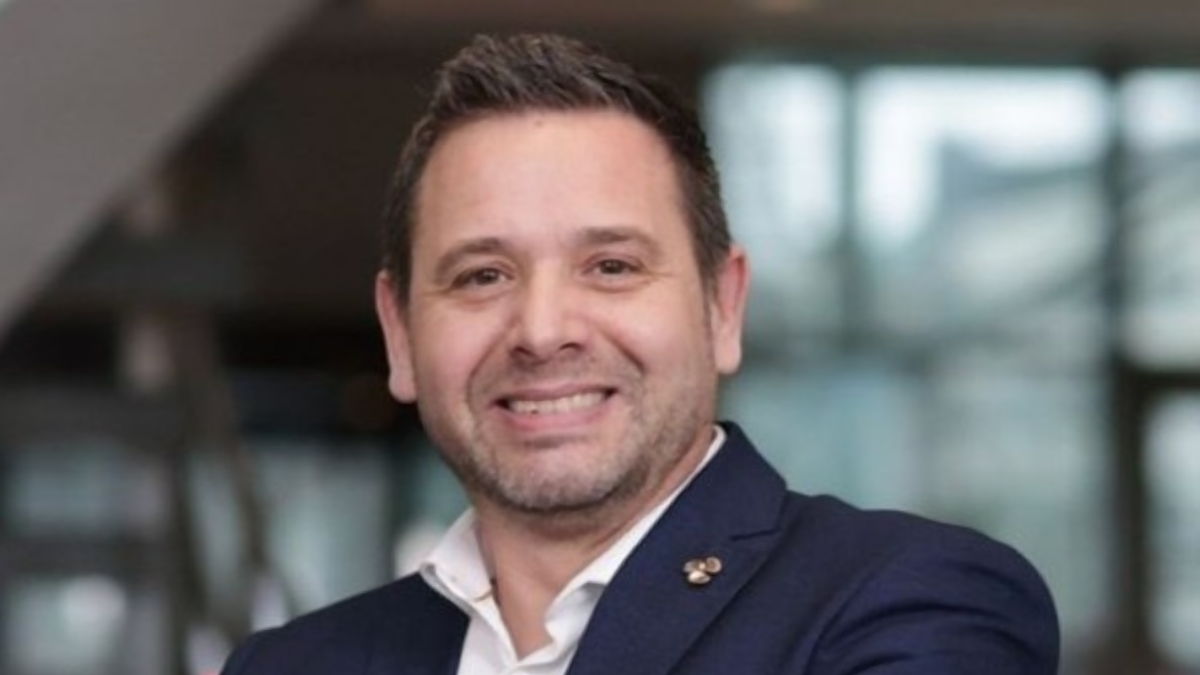
Cathelco product and technical manager, Chris Hewitt, set out the physics plainly. “Many conventional anti-fouling coatings perform best when the vessel is moving,” he said. Movement keeps the hull refreshed. A coating cannot protect a hull at rest if it was not designed to do so.
This is the constraint facing vessels held in the Gulf. Nick Cowley, president of the Cathelco and HEM business line at Evac Group, has not long returned from shipyard and client visits in the UAE. He brings a clear message: prevention has moved from a niche concern to a priority. Some yards cannot handle the volume of vessels awaiting cleaning. Some jurisdictions restrict where fouling can be discharged into the water.
Cathelco’s response is ultrasound. Its USP DragGone system, launched in 2024, mounts transducers inside the hull. These propagate guided ultrasonic energy through the hull plating and disrupt organism settlement before it begins. The company makes a second, practical claim: prevention keeps vessels trading. Cleaning removes them from service. A system that limits fouling protects both the coating and the operating schedule.
Prevention versus cleaning
Here, Cathelco is pushing against the regulatory direction. Industry focus is moving towards cleaning rather than prevention. ISO 6319, published in 2026 under the Bellona-led Clean Hull Initiative, sets the first international standard for in-water cleaning and its documentation. IMO is also developing a standalone biofouling convention, agreed in principle. A correspondence group is drafting the text for consideration at PPR 14 in January 2027. The framework will follow familiar lines: management plans, record books, inspections and certification. A full draft is unlikely before 2029.
Mr Cowley’s concern is that this structure governs the response to fouling, not its avoidance. “Committees,” he said, “remain more focused about the cleaning and not the prevention.” Prevention is treated as optional, rather than standard practice.
There is a counterpoint. A regime built on inspection and enforcement favours what can be verified. A clean hull is straightforward to certify. The absence of fouling is harder to prove.

The evidence question
Does the system work at scale? Mr Hewitt acknowledged the gap between laboratory results and real-world application. Cathelco’s early “Clean Ship” project showed that ultrasound could suppress fouling on test plates in harbour conditions. Extending that effect across a 300-metre hull required different methods. The company cites two patented approaches: guided-wave transmission, which carries ultrasonic energy along the steel, and heterodyning, which produces multiple frequencies to target a wider range of organisms.
“We can put transducers in a single location and then protect a 50-metre-diameter protection range,” Mr Hewitt said. Without these techniques, coverage would be limited to one or two metres. The company’s operational evidence is commercial. Cruise vessel operators have returned for third and fourth installations, citing fuel savings and dive inspections before and after installation.
Where the case weakens
The prevention argument is strongest for large vessels with high fuel consumption, where owners bear the bunker cost. “This type of equipment can pay for itself within a year,” Mr Cowley said, citing payback periods of six to 18 months for large cruise ships.
Change the commercial structure and the case weakens. In charter markets, owners often do not pay for fuel. The fuel-saving argument then falls away. The investment must be justified on different grounds, such as schedule reliability, avoidance of penalties, or uptime for public or naval fleets.
Coverage is another limitation. Ultrasound protects only the areas its transducers can reach. The highest-risk zones are often those with limited flow, and these are also the areas inspectors target. Sea chests, thruster tunnels and rudder recesses are typical examples.
Cathelco has expanded its systems to address these areas. It has adapted ultrasound for thruster tunnels, moon pools and propellers, and combined it with marine growth prevention and cathodic protection systems. “It should be a complete biofouling management system, rather than just overpainting it and hoping for the best,” Mr Hewitt said.
The unfinished argument
Cathelco has operated in this field for 70 years. Its systems have been fitted to more than 20,000 vessels since 1956. Mr Hewitt’s sharpest criticism is directed at industry habit. A vessel arrives at dry dock with fouling issues, receives the same coating, and returns to service with the same expectations.
“We do the same thing but expect a different result,” Mr Cowley said. “It shows how slowly industry habits can change” He compares ultrasound to cathodic protection: once novel, now standard alongside coatings. His broader point is measured. Hull condition is an efficiency and emissions issue, not simply a maintenance task. “We have the technology, we have evidence it works,” he said.
The coming convention will be built on testing, verification, surveys and record-keeping. It will reflect the language of cleaning and compliance. The central question is straightforward. When PPR 14 turns objectives into treaty text, will the regime reward keeping a hull clean, or simply regulate how it is cleaned?





Related to this Story



Events

Maritime Regulations Webinar Week
 16 Dec 2025
 GMT - ONLINE

Floating energy: successfully unlocking stranded gas using FLNGs and FSRUs
24 Feb 2026GMT - ONLINE
© 2026 Riviera Maritime Media Ltd.


