


Business Sectors
Business Sectors
Events
Contents

Register to read more articles.

Biofouling: don’t get caught with a dirty hull
Biofouling is coming under increased regulatory scrutiny, on international and national levels, with IMO’s PPR 14 set to outline a legally binding framework in 2027


New national regulations on biofouling make it clear that a dirty hull is no longer just an efficiency issue, but a big compliance headache.
Biofouling, the accumulation of microorganisms, algae, plants, and animals on a ship’s hull, has long been recognised by IMO as a vector for invasive aquatic species to be transferred to state waters. IMO first released biofouling guidelines in 2011 and updated its Guidelines for the control and management of ships’ biofouling to minimize the transfer of invasive aquatic species in 2023.
The guidelines lay out best practices for biofouling management, including installing a type-approved anti-fouling system, implementing a vessel-specific biofouling management plan, maintaining a biofouling record book, and conducting regular inspections.
Discussions will be held on a legally binding framework for biofouling in January 2027 at the 14th session of IMO’s Sub-Committee on Pollution Prevention and Response (PPR 14). A new convention could be considered at the Marine Environment Protection Committee’s 86th session in 2027, with possible finalisation of a legally binding framework by 2029.
Anti-fouling coatings, planning and record-keeping, inspections, and in-water cleaning – both proactive and reactive – are sure to be scrutinised.
Brazilian rules
In June 2025, Brazil became the latest country to enact state biofouling measures, joining Australia and New Zealand. P&I insurer Gard noted that while the operational requirements of the new Brazilian biofouling management regulation took effect on 17 June 2025, enforcement has been deferred to 10 January 2028. Nevertheless, Brazilian authorities are expected to monitor the technical and operational compliance of vessels trading to and operating in state waters during this period.
Gard recommends that ship operators: contact local agents and port authorities well in advance to arrange reactive hull cleaning, if required, considering any local and port restrictions; conduct inspections and cleanings prior to arrival in Brazil; and carefully document hull cleaning and compliance efforts. Additionally, charterparty clauses regarding responsibilities for underwater inspections and hull cleaning should be amended, if necessary.
One ship operator moving quickly to address biofouling management is COSCO Shipping Bulk, which manages dry bulk shipping for grain and iron ore cargoes across South America, including Brazil. The ship operator signed an agreement with Jotun COSCO Marine Coatings (JCMC) for anti-fouling solutions for 125 bulk carrier newbuildings.
Under the agreement, high-performance anti-fouling coating systems will be installed on the COSCO Shipping Bulk fleet to optimise fuel consumption, lower emissions, and reduce environmental risk.
Three newbuildings will be covered by Jotun’s Hull Skating Solutions (HSS), which includes the robotic hull cleaner Hull Skater. The evaluations will be based on operational conditions, as part of a broader effort to deliver continuous improvements in energy efficiency and environmental performance. Using a combination of physical in-water inspections and performance monitoring data, DNV independently verified that vessels using HSS maintained clean hulls and had no measurable speed loss.
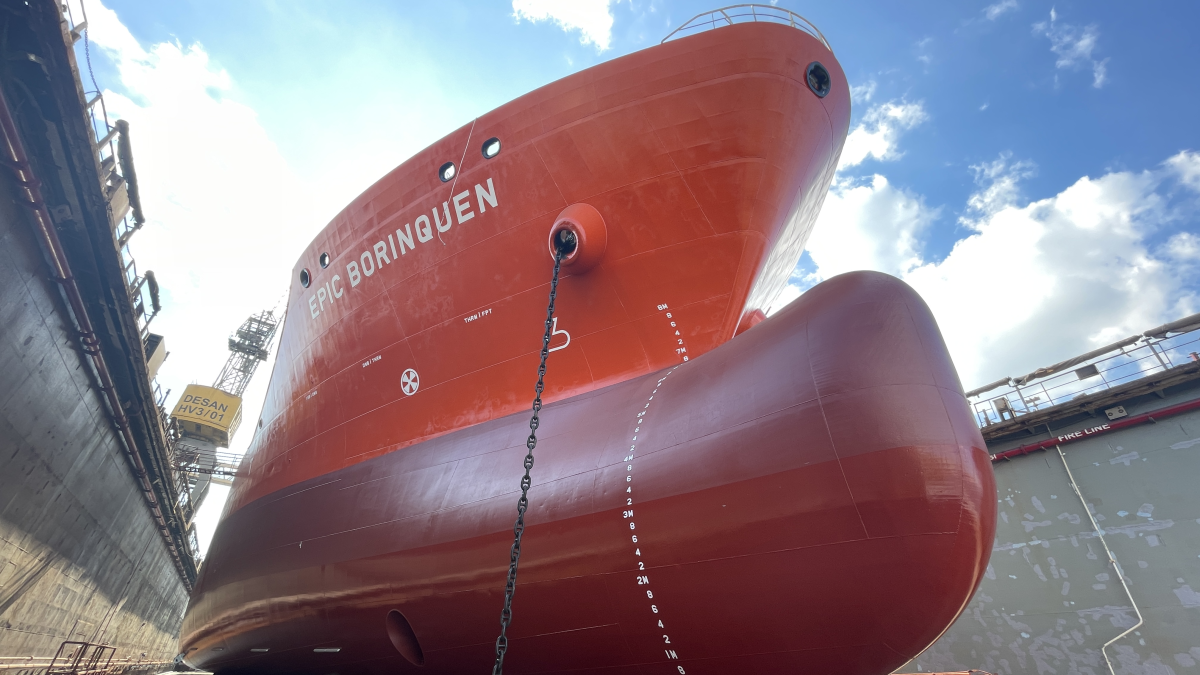
Singapore-based gas ship operator BW Epic Kosan (BWEK) plans to coat five of its LPG carrier fleet with GIT’s biocide-free graphene-based hull coating technology. An initial 12-month trial on an LPG carrier during commercial operations convinced the ship operator to expand the use of the hard foul-release coating and employ proactive hull cleaning using onboard robotic cleaning technology and dedicated advisory support. GIT Coatings has received Lloyd’s Register Enhanced Type Approval, validating that the coating maintains its performance after repeated cleaning.
“Charterparty clauses for underwater inspections and hull cleaning should be reviewed”
One focus of the cooperation between the two parties has been the benefit of a proactive hull management plan that includes planned inspections and removal of early-stage slime before more resistant fouling develops. This supports fuel efficiency and lower emissions, while reducing the environmental impact on water associated with aggressive reactive cleaning of biocidal self-polishing anti-fouling coatings, according to GIT.
During a case study, a BWEK LPG carrier showed extremely low average hull roughness (60-70 μm), which contributed to an out-of-dock power gain of approximately 6% compared to the previous coating system. Over the following year, inspection footage showed the gas carrier remained free of hard fouling, supported by the removal of early-stage fouling, with no visible coating damage observed after each cleaning.
“Hull performance directly affects fuel consumption”
Based on its initial experience, BWEK has also adopted GIT’s next-generation XGIT-Force coating, which supports longer cleaning intervals and better resistance to reactive cleaning.
Biofouling risks in the Strait
Mines are not the only underwater threat that ships trapped behind the Strait of Hormuz face. Biofouling is an operational risk, too. This point was made by Skuld assistant vice president and technical manager, Dick Farrel Camoying, who cautioned that ships trapped by the Middle East conflict in the Persian Gulf might experience clogging of their fuel systems, marine growth buildup on their hulls and degraded anti-fouling system performance.
Ships that have sat idle for extended periods of time in warm and tropical waters are susceptible to increased levels of marine growth and biofouling.
“This will result in increased hydrodynamic resistance and, in the worst case, blockage of seawater intakes,” said Mr Camoying. Skuld recommends inspecting the condition of the hull coating, rudder, and propeller, and conducting approved cleaning techniques to avoid coating damage.
“Hull performance directly affects fuel consumption, and it is important to keep the hull clean and maintain the specialised coating to reduce overall energy consumption,” he said.
By design, self-polishing and ablative coatings need vessel movement to maintain their effectiveness. Operators should check the anti-fouling systems of idle ships for uneven polishing, flaking, blistering and spot corrosion.
Mr Camoying said Skuld recommends “gentle cleaning to preserve coating integrity and resume operation with a progressive speed increase to reactivate coating functionality, where applicable. If coating performance is severely compromised, plan for dry-docking.”





Related to this Story



Events

Maritime Regulations Webinar Week
 16 Dec 2025
 GMT - ONLINE

Floating energy: successfully unlocking stranded gas using FLNGs and FSRUs
24 Feb 2026GMT - ONLINE
© 2026 Riviera Maritime Media Ltd.


