


Business Sectors
Business Sectors
Events
Contents
Register to read more articles.
Bulk conference maps safety, decarbonisation and data
International Bulk Shipping Conference highlighted tightening safety rules, costly decarbonisation choices and the growing role of validated data and wind assistance


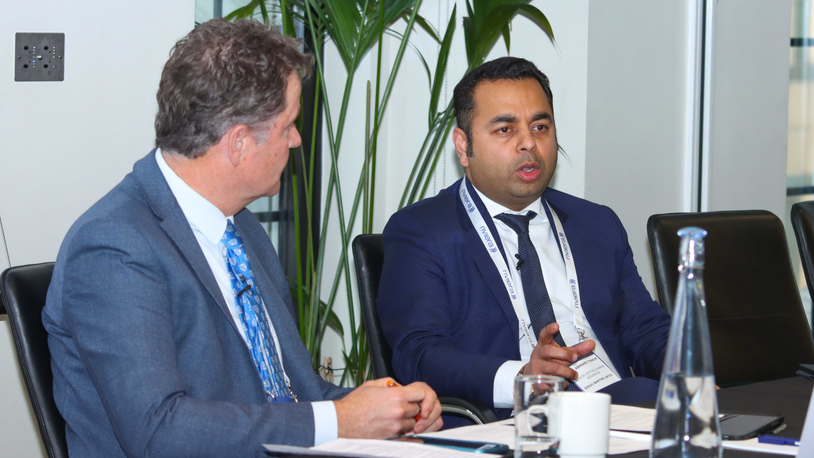
Bulk carriers were shown to be at the forefront of efficiency improvements, but delegates at the International Bulk Shipping Conference, hosted by law firm Stephenson Harwood on 18 November 2025, heard repeated warnings that the next phase of regulation, fuel transition and data transparency would demand deeper operational discipline across the sector.
A tightly focused one-day agenda in London, led by event moderator Lookout Maritime chief executive Martin Crawford-Brunt, examined safety and cargo risk, regulatory change, decarbonisation options and the role of digital tools and wind-assisted propulsion in protecting margins in an increasingly exposed market.
Safety, regulation and cargo risk under scrutiny
The opening session set bulk carrier performance in a wider fleet context, benchmarking dry bulk against tankers and container ships on carbon intensity and showing that bulk carriers had already delivered substantial efficiency gains since 2008.
Delegates were reminded that segment, trade and operating profile mattered: meaningful decisions on investment and compliance depended on vessel-specific, validated data rather than generic benchmarks.
Regulatory updates underline how fast the risk landscape is shifting
Speakers highlighted new ballast water record-keeping rules effective from February 2025 and the move to electronic records from October, Marpol Annex VI amendments for low-flashpoint fuels and their bunker documentation implications.
Changes highlighted included new obligations on cargo density and the reclassification of direct reduced iron as a dangerous cargo.
Decarbonisation choices, carbon pricing and legal gaps
The decarbonisation debate exposed a widening gap between high-profile pilot projects and day-to-day tramp operations.
Intercargo described members’ investments in ammonia, ethanol and methanol-fuelled tonnage, backed by long-term charter support, but stressed that most bulk carriers still relied on conventional fuel and short fixtures, with little visibility on future fuel prices, availability or infrastructure.
Class data showed around 20% of the bulk carrier orderbook as alternative-fuel-ready or dual fuel, compared with about 2% of the existing fleet, with LNG dominating current uptake and methanol and ammonia following.
Fuel suppliers argued that LNG would remain a central part of the mix, while legal experts warned that existing liability conventions did not yet fully address alternative fuels as bunkers.
Wind assistance and data: tools for competitive advantage
Wind-assisted propulsion providers demonstrated fuel savings ranging from about 5% on less favourable routes to more than 20–30% on longhaul east–west trades, with case studies on very large bulk carriers and an installed base of 25 rotors and growing.
Delegates heard how retrofittable ’lift-and-shift’ rotor installations could be completed in around two weeks, extending the period before vessels slipped into poorer CII bands, while alternative e-sail concepts showed similar potential.
Digitalisation was presented as the second major lever with owners and managers describing how poor or inconsistent data still undermined time-charter equivalent calculations and performance assessment, with many decisions still based on charter-party descriptions rather than measured behaviour.
Standardised, digital documentation workflows and APIs to class societies were shown to save tens of hours per month across modest fleets, while providing a single source of truth for inspections, vetting and commercial decisions.
Sign up for Riviera’s series of technical and operational webinars and conferences:
- Register to attend by visiting our events page.
- Watch recordings from all of our webinars in the webinar library.


Related to this Story
Events

Maritime Regulations Webinar Week
 16 Dec 2025
 GMT - ONLINE
Floating energy: successfully unlocking stranded gas using FLNGs and FSRUs
24 Feb 2026GMT - ONLINE
© 2026 Riviera Maritime Media Ltd.


