


Business Sectors
Business Sectors
Events
Contents

Register to read more articles.
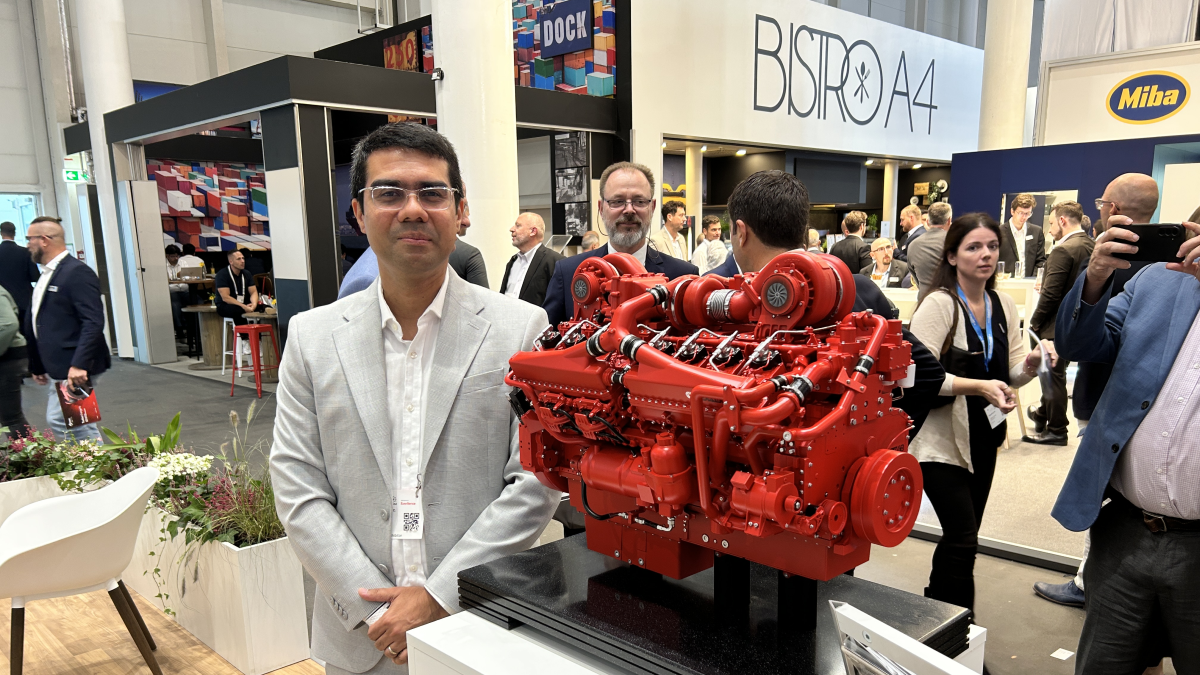
Cummins bridges the gap between existing engines and future fuels
The engine maker has developed a methanol dual-fuel retrofit kit for the QSK60 IMO Tier II and Tier III engines


Cummins has developed a methanol dual-fuel retrofit kit for its high-horsepower QSK60 engine, placing the four-stroke, high-speed engine at the centre of its marine energy transition strategy.
In an interview with Marine Propulsion at SMM 2026, Carlos Ortega, marine product manager for Cummins’ high-horsepower marine engine range, outlined how the company is preparing its portfolio for evolving emissions reduction regulations and lower-carbon fuels, while keeping a sharp focus on total cost of ownership (TCO) for vessel owners.
Reducing vessel owners’ capex starts with making it easier to transition to lower carbon fuels without switching engines. In June 2024, DNV issued an approval in principle (AiP) to Cummins for its methanol-ready QSK60 IMO II and IMO III engines, available in the power range of 1,491 to 2,013 kW. The AiP validates the engine maker’s retrofittable methanol dual-fuel solution for the global marine market.
“It was a great achievement,” said Mr Ortega, noting that AiP signifies that the retrofit kit meets the highest standards of safety and performance. Calling the QSK60 affectionately “his baby”, he described the engine as a high-value growth product with strong competitive positioning. The AiP signals that the engine technology has achieved technical readiness, even as the market and emissions regulatory landscape continue to evolve.
“The most important parts of the approval are that we have market readiness and are prepared for customer demand, and the technology from the QSK60 applies across our high-horsepower portfolio,” said Mr Ortega.
“Dual-fuel engines can be paired with battery systems to optimise efficiency”
The methanol concept for the QSK60 is built around a dual-fuel, diesel-cycle approach. The engine will primarily run on methanol, using 5 to 10% diesel as pilot fuel. Current testing shows the system delivering efficiency above 85%, with further optimisation ongoing.
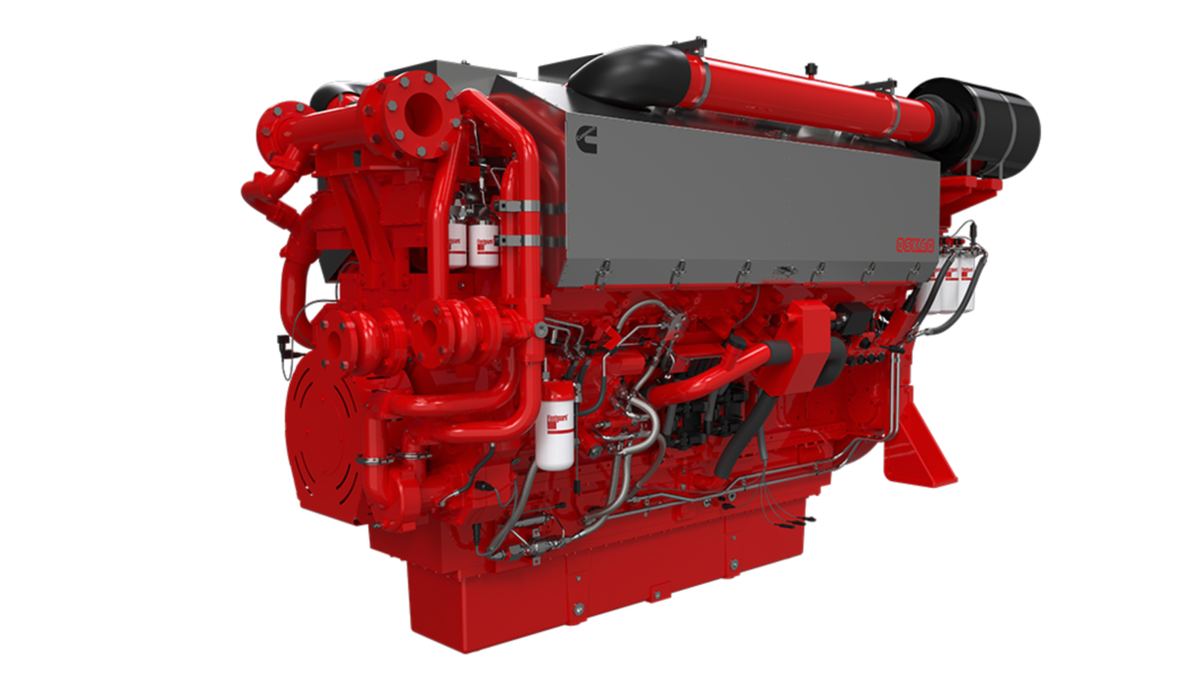
Cummins engines use a modular common-rail fuel system that provides high-injection pressure, regardless of engine speed or load condition. Cummins plans to deliver a retrofit kit – focused mainly on injectors and cylinder heads – to allow operators to adapt existing engines for methanol use. This approach, noted Mr Ortega, is designed to provide flexibility and reduce both upfront investment and operational disruption.
The sectors most likely interested in the methanol-ready QSK60 kit are offshore support vessels (OSVs), offshore construction vessels, offshore wind vessels, workboats and ferries. Operators in renewable energy markets are under mounting pressure to align vessel emissions with the low-carbon profile of the projects they serve, creating a natural pull for alternative fuels like methanol and hybrid solutions.
Starting 1 January 2027, offshore ships of 5,000 gross tonnes and above will be subject to the cap-and-trade systems of the EU Emissions Trading System (EU ETS) and the UK ETS, with most service operation vessels (SOVs) falling within this threshold. Offshore vessels must pay for every tonne of CO2e emitted during voyages between ports, or servicing windfarms or offshore structures in territorial waters.
“We are analysing the requirements from the market and the customer,” said Mr Ortega. “This is part of our ‘Destination Zero’ strategy to manage alternative fuels and the decarbonisation spectrum.”
Methanol is not the only alternative fuel or technology in Cummins’ decarbonisation strategy. In 2023, the engine manufacturer approved the use of renewable diesel, including hydrotreated vegetable oil (HVO), in all its diesel high-horsepower engines. Using renewable diesel like HVO can reduce net greenhouse gas (GHG) emissions by up to 90% compared to conventional diesel, depending on the exact feedstock and fuel pathway, according to Cummins.
“Cummins currently sees limited interest in ammonia in the power range its engines serve”
Electrification also figures strongly into the Big Board-listed engine maker’s strategy. It strengthened its capabilities in hybridisation and electrification in February 2025 through the acquisition of First Mode, which specialises in hybrid solutions for mining and rail applications. This in-house expertise in batteries and hybrid systems is increasingly relevant for marine applications, where dual-fuel engines can be paired with battery systems to optimise efficiency, reduce fuel consumption and emissions, and improve operational flexibility.
Cummins currently sees limited interest in ammonia in the power range its engines serve. It believes most demand for the zero-carbon fuel will come from large oceangoing vessels outside its core market, said Mr Ortega. But he stressed that the company maintains a five-year roadmap that keeps ammonia and other emerging fuels on the table, ready to be developed further if owner demand materialises. A similar dynamic is evident with hydrogen, where early momentum has slowed due to infrastructure constraints and lagging customer readiness.
Throughout the interview, Mr Ortega stressed the importance of customer economics and TCO. “We are always focused on working on how to improve our engines to meet customer expectations and align with their KPIs,” he said. He cited two examples: one involved a recent analysis of operational engine data across regions and applications that allowed Cummins to reclassify the duty cycles and increase time between overhauls by 15% across its portfolio. Second, none of Cummins’ electronic engines require a midlife overhaul, delivering significant savings and higher uptime. “That is a huge savings for our customers – especially critical for workboats like tugs and OSVs, where even a single day offline carries substantial cost,” concluded Mr Ortega.





Related to this Story


Events

Maritime Regulations Webinar Week
 16 Dec 2025
 GMT - ONLINE

Floating energy: successfully unlocking stranded gas using FLNGs and FSRUs
24 Feb 2026GMT - ONLINE
© 2026 Riviera Maritime Media Ltd.


