


Business Sectors
Business Sectors
Events
Contents

Register to read more articles.
KBB bets on adaptable turbochargers as fuel choices multiply
Methanol and ammonia are set to become significantly more important, yet much of the world fleet will keep burning comparatively cheap heavy fuel oil for years to come


For German turbocharger maker KBB, the changing fuels landscape means supporting new propulsion concepts while keeping existing installations competitive.
Kompressorenbau Bannewitz has built exhaust-gas turbochargers at Bannewitz, near Dresden, since 1953. Its axial and radial machines serve medium- and high-speed diesel, gas and dual-fuel engines of roughly 500 kW to 6,000 kW on ships, locomotives and generator sets.
KBB describes its current output as the ninth generation of turbochargers to emerge from Bannewitz, a heritage now being tested against a fuel transition that is anything but uniform.
Dual-fuel engines already predominate in new orders, KBB observes, but retrofits remain costly. The company therefore faces a twofold challenge: supporting new propulsion systems; and adapting existing ones to changing operating conditions.
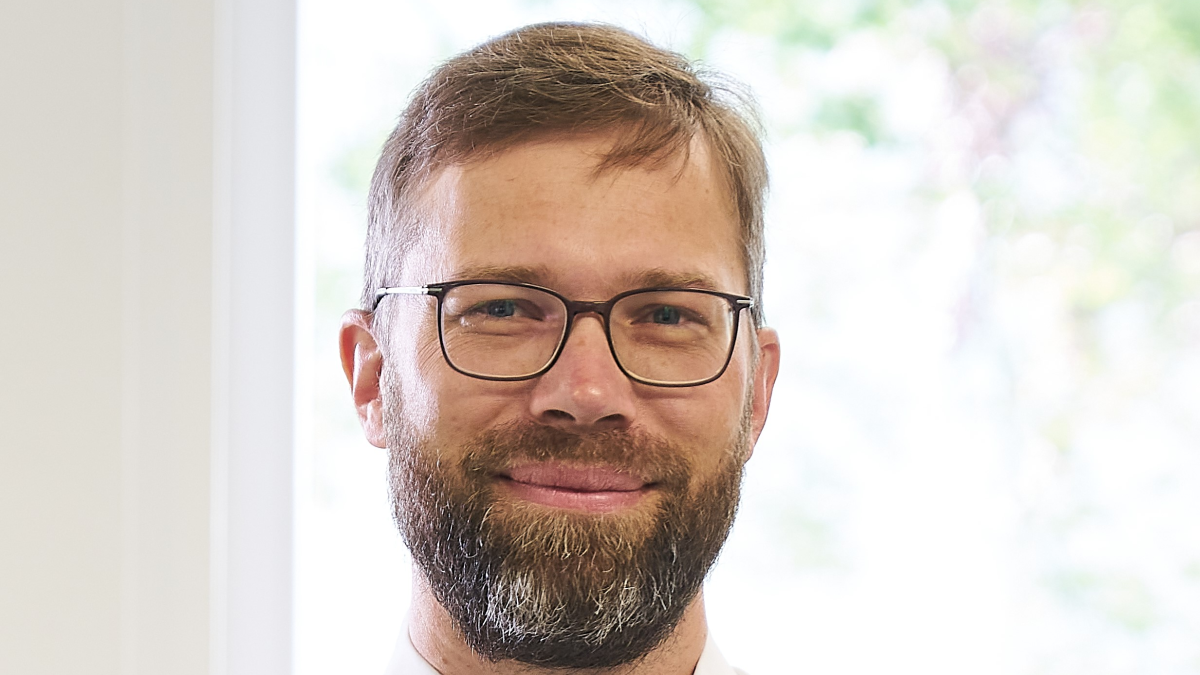
"The complexity of marine propulsion systems is constantly increasing," said Dr Silvio Risse, engineering director at KBB. Different fuels call for tailored turbocharging concepts, depending on the operating point.
Added to that are interactions with exhaust aftertreatment and the altered load profiles created by hybrid propulsion. The turbocharger must therefore operate efficiently and reliably across a considerably broader operating range than before.
On methanol and ammonia, KBB sees no new thermodynamic hurdles in principle for tuning the exhaust gas turbocharging system. High boost pressures and efficiency remain essential. The company points to single and two-stage systems with boost pressure ratios of up to 12:1 and turbocharging efficiencies exceeding 75 per cent.
"People matter as much as metallurgy"
KBB is investigating how its materials behave under various operating conditions. According to the company, initial field inspections after several thousand operating hours are yielding positive results.
The major challenge lies elsewhere, in the lubricating oil circuit. New fuels require suitable engine oils, and their long-term compatibility with bearing materials has to be assured. Ammonia adds a corrosion problem. Its interaction with engine oils can degrade materials, particularly copper-bearing components, and KBB has responded with higher-performance alloys and optimised air intake and compression systems.
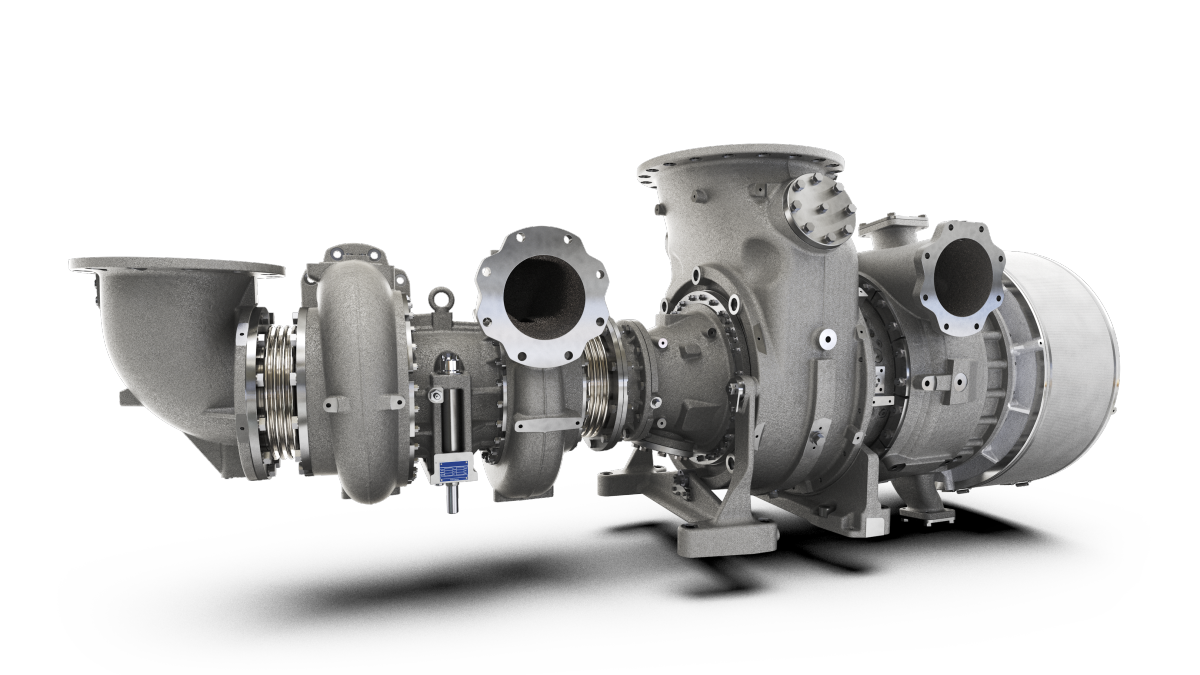
Advanced alloys and ceramic coatings are also in development, intended to preserve durability and efficiency under the combined thermal and corrosive stress of ammonia and hydrogen combustion.
People matter as much as metallurgy. With ammonia, maintenance personnel and crew need training and appropriate protective equipment for handling contaminated oils and surfaces. KBB runs a training centre at Bannewitz for its service partners.
Hydrogen poses a different test. Its rapid combustion and high flame speed create extreme thermal loads and demand considerably more air mass flow than conventional fuel oils. KBB has developed turbochargers for those conditions in dual-fuel designs. It is also exploring ammonia and hydrogen blends, which can improve combustion stability and potentially reduce the need for complex aftertreatment.
That aftertreatment matters significantly because ammonia alone tends to demand it, owing to its nitrous oxide emissions. KBB designs its turbochargers to work with SCR and exhaust gas recirculation systems, specified jointly with the engine builder.
For installed units, modularity is the answer. "KBB’s modular system allows for flexible retrofitting of all components to new thermodynamic conditions, even for TCs that are already installed," explained Dr Risse.
Bearings and seals can be adapted as well. Changes should be coordinated early, because classification societies often require recertification or renewed type approval. KBB says it is always available to support customers with technical and administrative expertise.
Greater variability in the compressor and turbine is one avenue KBB sees for widening that operating range. Electric assistance is another. An electric module could improve acceleration and recover energy through regenerative braking.
"We are investigating electric assistance and energy recovery with an open mind. The key factor is the demonstrable benefits these functions offer in specific ship operations," said Dr Risse.
Those benefits depend on how the function interacts with the engine, the propulsion system and the operational profile. Any added complexity must be justified by cost-effectiveness, reliability and practical integration into onboard operations.
Whether such solutions gain traction in the international marine market remains to be seen. That uncertainty does not deter KBB from continuing to explore the technical potential.
Digital tools are the other research strand. Operational data is intended to support condition-based maintenance, helping to evaluate changing loads, save fuel and prevent unplanned outages. Under suitable conditions, maintenance intervals could be extended.
"Condition monitoring is intended to provide a solid foundation for using the turbocharger efficiently and reliably, even under changing operating conditions," explained Dr Risse.
KBB has also agreed a cooperation with German technology company AVAT, aimed at advancing turbocharger performance and efficiency for large combustion engines through digitalisation. The company says its environmental commitment extends to its own production, citing sustainable processes, regional sourcing, efficient technologies and renewable energy to reduce its manufacturing footprint.
Here too, widespread market acceptance is uncertain. For shipowners, high fuel costs, limited availability, costly retrofits and a lack of long-term experience further complicate investment planning.
Close collaboration between turbocharger manufacturers, engine manufacturers and operators throughout the whole life cycle is therefore crucial. KBB combines the adaptation of proven technology with research into new functions.
Technical performance, long-term maintainability and economic benefit must be evaluated together under real-world operating conditions. Which solutions become established will be decided by their demonstrable operational benefits.
The message from Bannewitz is pragmatic rather than evangelical. New functions, such as electric assistance and condition monitoring, earn their place only if they prove their worth on board, while modular retrofits keep proven hardware relevant as fuels change.
In a market still choosing its fuels, KBB is backing the one thing that never goes out of fashion: a turbocharger that can adapt.




Related to this Story


Events

Maritime Regulations Webinar Week
 16 Dec 2025
 GMT - ONLINE

Floating energy: successfully unlocking stranded gas using FLNGs and FSRUs
24 Feb 2026GMT - ONLINE
© 2026 Riviera Maritime Media Ltd.


