


Business Sectors
Business Sectors
Events
Contents

NASA report: sulphur cap key factor in record-low 'ship tracks'
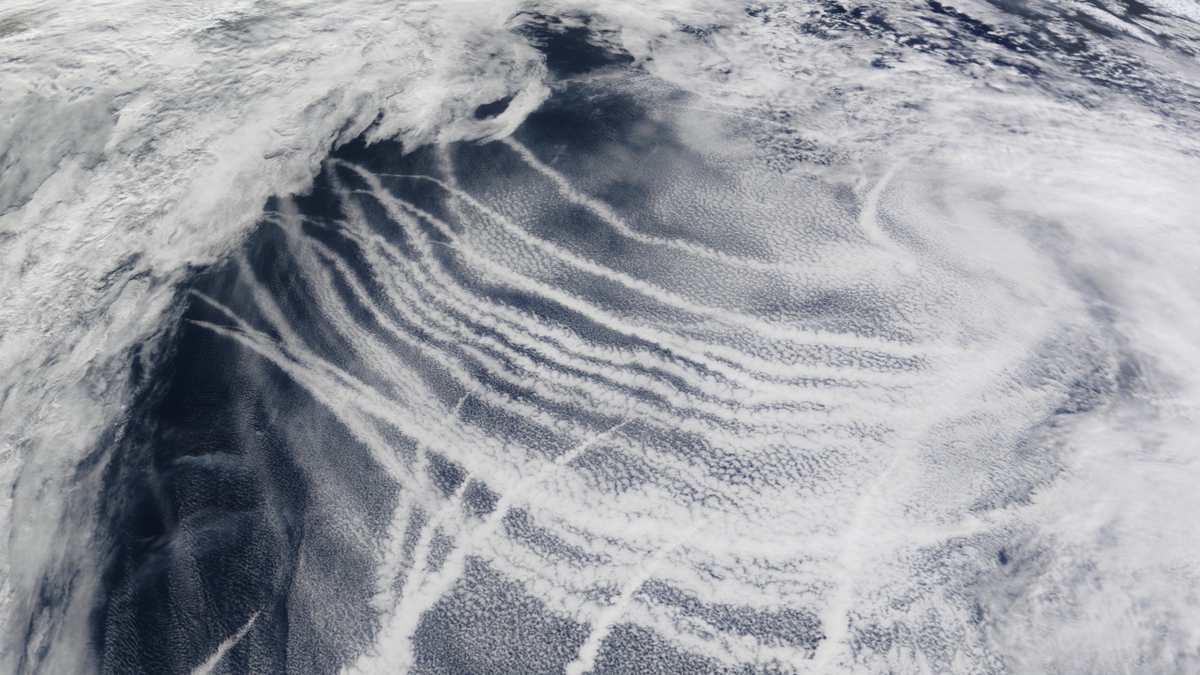
The density of shipping’s atmospheric polution signatures, known as ’ship tracks’, fell "in every major shipping lane" and remained at record-low levels, according to the most recent data analysed through 2020 and well into 2021


In a study of data recorded through satellite imagery of the Earth’s atmosphere by US space agency the National Aeronautics and Space Administration (NASA), researchers have found large reductions in levels of ship tracks that correspond with the implementation of International Maritime Organization’s (IMO) limits on sulphur in ship fuels.
NASA scientists have concluded the new global fuel regulation to reduce the percentage of sulphur allowable in marine fuels from 3.5% to 0.5% worldwide played the dominant role in reducing ship tracks in 2020 and these record-low levels then continued through much of 2021.
Acknowledging the onset of the Covid pandemic in 2020 had an impact by decreasing overall global ship traffic by 1.4% for a few months, the scientists said, "This change alone could not explain the large decrease in observed ship tracks, which remained at record lows through several months of 2021".
Scientists used advanced computing techniques to create the first global climatology measuring the history of ship tracks. They used artificial intelligence to automatically identify ship tracks across 17 years of daytime images spanning from 2003-2020 captured by NASA’s moderate resolution imaging spectroradiometer aboard the Aqua satellite.
“Without this kind of complete and large-scale sampling of ship tracks, we cannot begin to completely understand this problem,” said NASA atmospheric scientist and lead author for the study, Dr Tianle Yuan.
"Ship tracks were first observed as ’anomalous cloud lines’ in early weather satellite images acquired in the 1960s. They are formed by water vapour coalescing around small particles of pollution (aerosols) in ship exhaust. The highly concentrated droplets scatter more light and therefore appear brighter than non-polluted marine clouds, which are seeded by larger particles such as sea salt," NASA said in a statement on the study.
By capping fuel sulphur content at 0.5% (down from 3.5%), IMO’s 2020 global sulphur regulation changed the chemical and physical composition of ship exhaust, meaning ships are emitting fewer sulphur particles around which water vapour can coalesce. In total, NASA calculated the reduction in fuel sulphur content to be 86%.
According to Dr Yuan and his colleagues, the data also reveals that global regulations – as opposed to similar but regionally defined sulphur regulations such as an IMO Emission Control Area (ECA) in effect since 2015 off the west coast of the US and Canada – were what brought ship track levels down.
Localised ECAs "had not had the desired effect because operators altered their routes and charted longer courses to avoid designated zones," NASA said.
The Maritime Decarbonisation Conference Asia will be held 29 November 2022. Register your interest and access more information here





Related to this Story



Events

Maritime Regulations Webinar Week
 16 Dec 2025
 GMT - ONLINE

Floating energy: successfully unlocking stranded gas using FLNGs and FSRUs
24 Feb 2026GMT - ONLINE
© 2026 Riviera Maritime Media Ltd.


